Food prices continue to fall, spurred by cheap oil and abundant supply - UN
The trade-weighted index, which tracks prices of cereals, meat, dairy products, vegetable oils, and sugar on international markets, averaged 182.7 points over the month of January, down 1.9 per cent from its December level. Overall, the index had seen declines since April 2014. However, January’s dip was helped by “robust inventories” as well as continued strength in the United States dollar and weak global oil prices.
In addition, the UN agriculture agency noted that strong supply conditions for wheat and soy oil, as well as abundant global pigmeat available for export, had also contributed to the products’ price decline.
For its part, the FAO Dairy Price Index remained stable throughout the first month of the year, averaging 173.8 points, as rising butter prices offset a decline in prices for other dairy products such as cheese and skimmed milk powders. Meanwhile, sugar, averaging at 217.7 points, remained “virtually unchanged” from December.
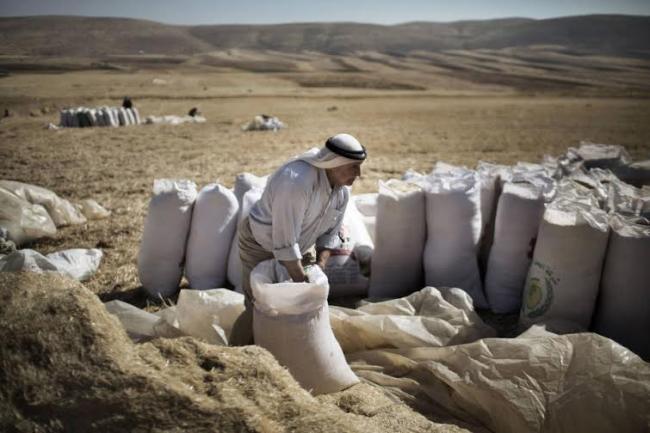
Against that backdrop, global cereal stocks in 2015 are forecast at around 623 million tonnes, up eight per cent from last year with inventories of wheat and maize expected to grow. Rice inventories, on the other hand, are “poised to drop” by some 4 million tonnes in 2015 with notable reductions in India, Indonesia and Thailand.
Nonetheless, the FAO pointed out that global cereal stock-to-use ratio for 2014 and 2015 would likely rise to 25 per cent – its highest level in more than a decade and “well above” the historic low of 18.4 per cent recorded in the 2007 – 2008 biennium.
Photo: FAO/Marco Longari
Support Our Journalism
We cannot do without you.. your contribution supports unbiased journalism
IBNS is not driven by any ism- not wokeism, not racism, not skewed secularism, not hyper right-wing or left liberal ideals, nor by any hardline religious beliefs or hyper nationalism. We want to serve you good old objective news, as they are. We do not judge or preach. We let people decide for themselves. We only try to present factual and well-sourced news.
Support objective journalism for a small contribution.