India moves to next frontier in electronics: Ashwini Vaishnaw says focus shifting to equipment and materials manufacturing
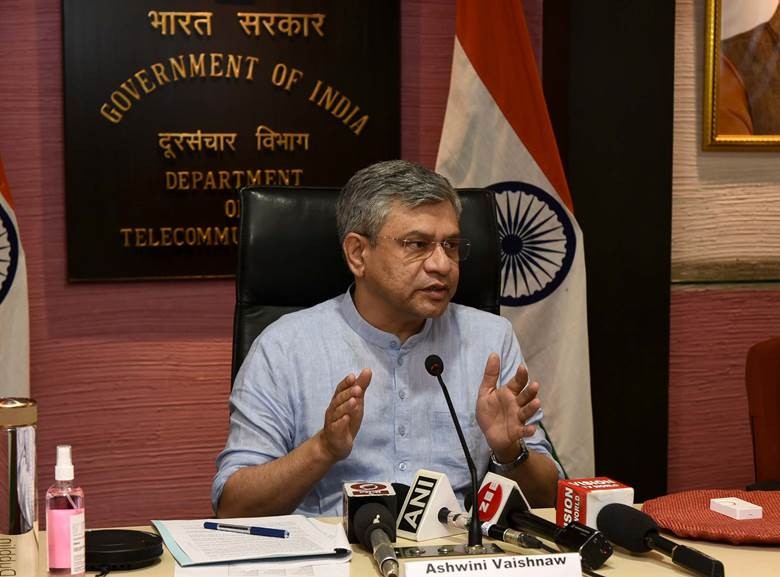
New Delhi: After clearing seven projects worth ₹5,532 crore under the electronics component manufacturing scheme, Union Electronics and IT Minister Ashwini Vaishnaw said India’s next focus will be on designing and manufacturing the equipment and materials used in electronics production—a move aimed at building a fully integrated ecosystem.
“We began with manufacturing finished products in India. This helped us build scale and skills. Next, we moved to modules and components. We are working on designing and manufacturing equipment used in electronics production. Next, we will go for manufacturing materials used in electronics production,” Vaishnaw told The Financial Express.
He said that for the semiconductor ecosystem, global leaders in chemicals and specialty gases are planning to set up operations in India.
“We are also promoting these industries as part of our broader semiconductor strategy,” he added.
India’s electronics story and smartphone PLI
Vaishnaw noted that India has become the world’s second-largest mobile phone manufacturer, with output growing 29-fold in 11 years to nearly ₹5.5 lakh crore.
“Exports have risen 131 times, crossing ₹2 lakh crore. In the July–September quarter, we exported 4.9 million iPhones. This is a new record,” he said.
On whether the government will extend the smartphone production-linked incentive (PLI) scheme that ends in 2026, he said any decision would be taken after consultations with the industry.
India as a trusted global manufacturing hub
The minister said global supply chain realignment has positioned India as a “stable and trusted partner”.
Electronics exports have risen eightfold in 11 years, he noted. “We have become the largest smartphone exporter to the US, surpassing all other countries. India is home to 20% of the global semiconductor design workforce, and we are continuously building our AI talent pool,” he said.
‘India transforming into a product nation’
Vaishnaw said India is evolving into an innovation-led, product-based economy backed by Indian intellectual property.
“Our homegrown startups are designing technologies in demand worldwide. For example, VerveSemi, a DLI-approved startup, is developing advanced semiconductor IPs for EVs, aerospace and smart energy systems,” he said.
He also cited Zoho as an example of a homegrown software product that has achieved global reach. “Zoho has over 120 million users in 150 countries. We followed a transparent bidding process through which Zoho was selected, and now we have shifted our email and office work to the Zoho suite,” he said, adding that more Indian apps will be supported under the Atmanirbhar Bharat vision.
Sustaining self-reliance
On sustaining digital sovereignty, Vaishnaw said it depends on innovation, scalability and ecosystem support.
“The foundation of any organisation has to go beyond initial enthusiasm. India Stack, IndiaAI Mission and India Semiconductor Mission provide budding innovators with DPIs, EDA tools, AIKosh datasets and targeted incentives through the DLI scheme,” he said.
He added that with these initiatives, India aims to achieve in five years what other countries took three decades to accomplish in domestic value addition.
AI mission and deepfake regulation
Vaishnaw said under the IndiaAI Mission, 12 startups have been selected to build homegrown foundational AI models — from large-scale efforts like Sarvam AI’s 120-billion parameter model and IIT Bombay-led BharatGen’s trillion-parameter model, to sectoral tools in health and robotics.
“We are backing this innovation with a common compute facility of more than 38,000 GPUs for startups and researchers,” he said.
On tackling deepfakes, Vaishnaw said, “Our society and trust are adversely affected by synthetic content. We have published rules to label synthetic content, and large sections of society have welcomed this move.”
Support Our Journalism
We cannot do without you.. your contribution supports unbiased journalism
IBNS is not driven by any ism- not wokeism, not racism, not skewed secularism, not hyper right-wing or left liberal ideals, nor by any hardline religious beliefs or hyper nationalism. We want to serve you good old objective news, as they are. We do not judge or preach. We let people decide for themselves. We only try to present factual and well-sourced news.
Support objective journalism for a small contribution.