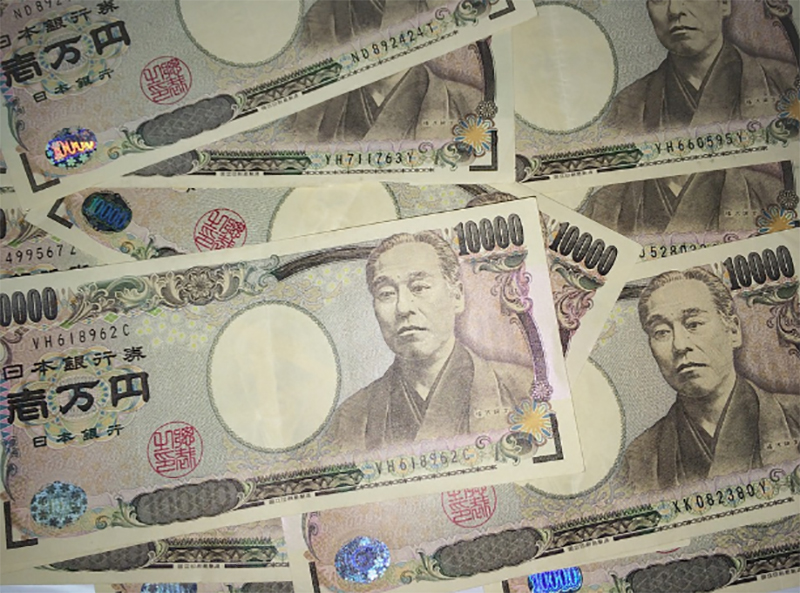
Japan ready to take all appropriate measures to check 'excessive volatility' in yen
Tokyo: Japan is ready to take all appropriate measures in response to excessive swings in its currency and is analysing the recent weakness in yen alongside its causes, said Finance Minister Shunichi Suzuki, media reported.
Following a recent surge to a new 34-year peak of 153.32 yen, the dollar settled at 153.18 yen in Asia on Friday. The Japanese currency has depreciated nearly 8% against the dollar since the start of the year, reported Reuters.
"I can't comment specifically on recent currency moves. But it's important for exchange rates to move stably reflecting fundamentals. Excessive volatility is undesirable," Suzuki was quoted as saying by Reuters.
"If there are excessive moves, we will respond appropriately without ruling out any options," he told a press conference on Friday.
Suzuki noted that multiple causes, including changes in monetary policy along with balance of payments, price trends, market sentiments and speculative moves, could be attributed to the current weakness in the yen.
Suzuki said that finance ministers and central bank governors from the Group of 20 major economies, scheduled to meet in Washington D.C. next week during the spring International Monetary Fund (IMF) meetings, might include discussions on currency fluctuations among the agenda items for deliberation.
The finance minister stated that he is working closely with top currency diplomat Masato Kanda to address movements in the yen. However, he chose not to make remarks on any plans to intervene in the market to support the currency, the report said.
Suzuki refrained from intensifying his previous warnings about taking "decisive action" in response to sharp yen declines, something he had said shortly before Japan intervened in the currency market in 2022.
Why a weak yen is a problem?
The weakening of the yen has become a concern for Japanese policymakers as it raises the cost of importing fuel and raw materials, negatively impacting retailers and households.
Household spending continued to decline for the twelfth consecutive month in February, as many consumers are still awaiting wage increases that outpace inflation.
According to a survey conducted by the Japan Center for Economic Research and released on Wednesday, analysts anticipate that Japan's economy will shrink by an annualized rate of 0.54% in the first quarter due to weak consumption and output, followed by a rebound of 1.69%, the report said.
The recent dappreciation of the yen complicates the Bank of Japan's decision-making process regarding the timing of the next interest rate hike, which analysts predict will occur later this year.
BOJ Governor Kazuo Ueda stated during a parliamentary session on Wednesday that the central bank would not directly adjust monetary policy in response to currency fluctuations. However, he acknowledged that the BOJ might take action if yen movements significantly impact the economy and prices, according to the Reuters report.
Japan's last intervention in the currency market occurred in 2022, with interventions in September and October aimed at bolstering the yen's value.
Support Our Journalism
We cannot do without you.. your contribution supports unbiased journalism
IBNS is not driven by any ism- not wokeism, not racism, not skewed secularism, not hyper right-wing or left liberal ideals, nor by any hardline religious beliefs or hyper nationalism. We want to serve you good old objective news, as they are. We do not judge or preach. We let people decide for themselves. We only try to present factual and well-sourced news.
Support objective journalism for a small contribution.