Labour migration in India increasing at an accelerating rate, reveals new study: Economic Survey 2016-17
The new Cohort-based Migration Metric(CMM) shows that inter-state labor mobility averaged 5-6.5 million people between 2001 and 2011, yielding an inter-state migrant population of about 60 million and an inter-district migration as high as 80 million. The first-ever estimates of internal work-related migration using railways data for the period 2011-2016 indicate an annual average flow of close to 9 million migrant people between the states. Both these estimates are significantly greater than the annual average flow of about 4 million suggested by successive Censuses and higher than previously estimated by any study.
The second finding from this new study is that migration for work and education is accelerating. In the period 2001-2011 the rate of growth of labour migrants nearly doubled relative to the previous decade, rising to 4.5 per cent per annum. Interestingly, the acceleration of migration was particularly pronounced for females and increased at nearly twice the rate of male migration in the 2000s. There is also a doubling of the stock of inter-state out migrants to nearly 12 million in the 20-29year old cohort alone. One plausible hypothesis for this acceleration in migration is that the rewards (in the form of prospective income and employment opportunities) have become greater than the costs and risks that migration entails. Higher growth and a multitude of economic opportunities could therefore have been the catalyst for such an acceleration of migration.
Third, and a potentially exciting finding, for which there is tentative but no conclusive evidence, is that while political borders impede the flow of people, language does not seem to be a demonstrable barrier to the flow of people. For example, a gravity model indicates that political borders depress the flows of people, reflected in the fact that migrant people flows withinstates are 4 times than migrant people flows across states. However, not sharing Hindi as a common language appears not to create comparable frictions to the movement of goods and people across states.
Fourth, the patterns of flows of migrants found in this study are broadly consistent with what is expected - less affluent states see more out migration migrating out while the most affluent states are the largest recipients of migrants. Figure 2 shows the strong positive relationship between the CMM scores and per capita incomes at the state level. Relatively poorer states such as Bihar and Uttar Pradesh have high net out-migration. Seven states take positive CMM values reflecting net in-migration: Goa, Delhi, Maharashtra, Gujarat, Tamil Nadu, Kerala and Karnataka. Fifth, the costs of moving for migrants are about twice as much as they are for goods – another confirmation of popular conception.
Policy actions to sustain and maximize the benefits of migration include: ensuring portability of food security benefits, providing healthcare and a basic social security framework for migrants – potentially through an inter-state self-registration process. While there do currently exist multiple schemes that have to do with migrant welfare, they are implemented at the state level, and hence require greater inter-state coordination.
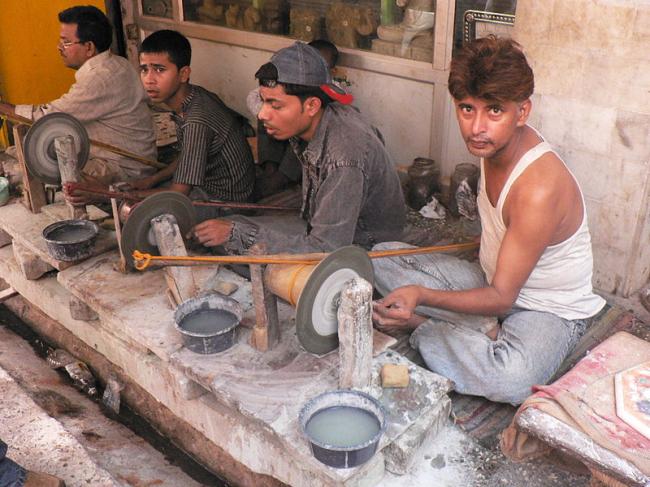
Image: Wikimedia Commons
Support Our Journalism
We cannot do without you.. your contribution supports unbiased journalism
IBNS is not driven by any ism- not wokeism, not racism, not skewed secularism, not hyper right-wing or left liberal ideals, nor by any hardline religious beliefs or hyper nationalism. We want to serve you good old objective news, as they are. We do not judge or preach. We let people decide for themselves. We only try to present factual and well-sourced news.
Support objective journalism for a small contribution.