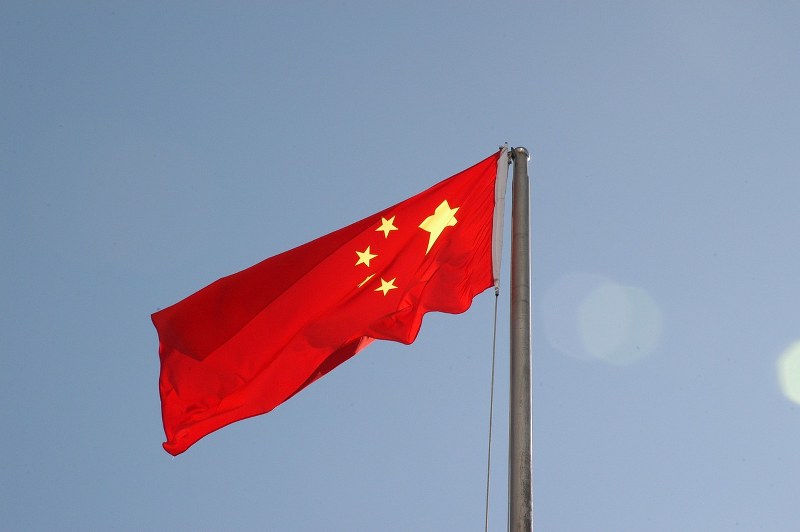
Moody's downgrades China's credit rating outlook from 'stable' to 'negative'
Beijing: Ratings agency Moody's on Tuesday revised China's credit rating outlook from "stable" to "negative" due to the increasing debt in the world's second-largest economy.
China has expressed its disappointment with Moody’s decision.
The A1 rating affirmation acknowledges China's substantial financial and institutional capabilities to manage a smooth transition.
The country's large economy and resilient, albeit slowing, potential growth rate contributes to its significant shock absorption capacity, the agency's note stated.
The change in outlook is attributed to mounting evidence suggesting government and broader public sector financial support for stressed regional and local governments, as well as state-owned enterprises, according to the note from the US agency.
This, it said, was "posing broad downside risks to China's fiscal, economic and institutional strength".
The move "reflects the increased risks related to structurally and persistently lower medium-term economic growth and the ongoing downsizing of the property sector", it added.
The huge real estate industry in China, constituting approximately 25% of the gross domestic product, is currently entangled in a severe debt crisis. Some of the largest developers in the country are burdened with debts amounting to hundreds of billions of dollars, putting them at risk of potential bankruptcy.
Considering China's government's consistent policy objective, Moody's anticipates that, over the medium term, the country's property sector will persist in being a smaller component of the overall economy compared to its size before the property correction initiated in 2021.
Moody's projects China's GDP to grow at 4% in 2024 and 2025, averaging 3.8% from 2026 to 2030, with demographic factors leading to a decline in potential growth to around 3.5% by 2030.
To compensate for the reduced impact of the property sector, substantial reforms are deemed necessary for consumption and higher value-added production.
China's recovery faces challenges like weak consumer and business confidence, a housing crisis, youth unemployment, and a global economic slowdown.
Despite these challenges, recent signs of improvement include third-quarter growth surpassing expectations at 4.9%.
Moody's anticipates gradual reforms to enhance innovation, education, rebalancing toward high-value sectors, and State-Owned Enterprises' productivity, supporting GDP growth and rising living standards despite execution risks.
Although the anticipated growth is reduced from earlier projections, it will still be robust when compared to other A-rated counterparts.
China's economic strength, supported by the sheer size of its economy, per capita GDP growth, and ongoing structural shifts toward higher-value sectors, remains a key consideration for Moody's.
Additional strengths include minimal external risks and low financing costs, facilitated by substantial domestic savings that enhance debt affordability.
The presence of significant fiscal and foreign exchange reserves, coupled with government control over parts of the economy and financial system, reinforces the effectiveness of measures aimed at mitigating financial and, subsequently, social stability risks, according to the ratings agency.
Support Our Journalism
We cannot do without you.. your contribution supports unbiased journalism
IBNS is not driven by any ism- not wokeism, not racism, not skewed secularism, not hyper right-wing or left liberal ideals, nor by any hardline religious beliefs or hyper nationalism. We want to serve you good old objective news, as they are. We do not judge or preach. We let people decide for themselves. We only try to present factual and well-sourced news.
Support objective journalism for a small contribution.