


 Child
Child
1 in 10 babies worldwide are born preterm, with complications, UN agencies warn
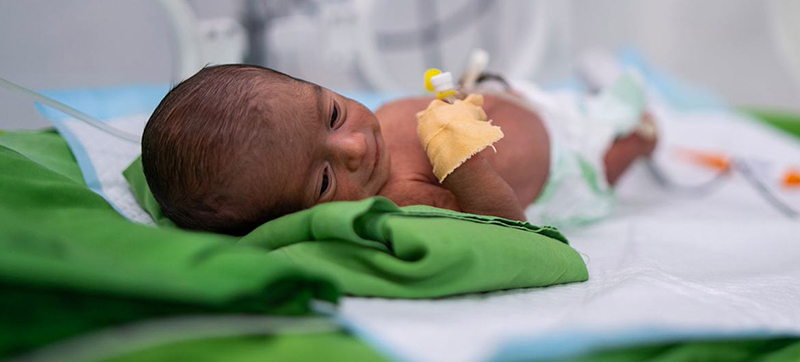
New York: An estimated 13.4 million babies were born early in 2020, with nearly one million dying from preterm complications, UN agencies and partners said in a new report on Thursday.
An estimated 13.4 million babies were born early in 2020, with nearly one million dying from preterm complications, UN agencies and partners said in a new report on Thursday.
The data is equivalent to around 1 in 10 babies born early, before 37 weeks of pregnancy worldwide. Health experts blame poor maternal health and malnutrition for the high numbers.
“Since prematurity is the leading cause of death in children’s early years, there is an urgent need to strengthen both care for preterm babies as well as prevention efforts – particularly maternal health and nutrition – so as to improve childhood survival,” the World Health Organization (WHO), the UN Children’s Fund (UNICEF) and the London School of Hygiene and Tropical Medicine said.
They stated that “For those who live, preterm birth also significantly increases the likelihood of suffering major illnesses, disability and developmental delays, and even chronic diseases as adults like diabetes and heart conditions.”
Maternal health risks
As with other major trends relating to maternal health, no region of the world has significantly reduced rates of preterm births over the last decade. The annual global rate of reduction in preterm births between 2010 and 2020 was just 0.14 per cent.
“Preterm babies are especially vulnerable to life-threatening health complications, and they need special care and attention,” said Dr. Anshu Banerjee, Director of Maternal, Newborn, Child and Adolescent Health and Ageing at WHO.
Global estimates
The paper, National, regional, and global estimates of preterm birth in 2020, with trends from 2010: a systematic analysis, provides global, regional and country estimates and trends for preterm births between 2010 and 2020, revealing large disparities between regions and countries.
Around 65 per cent of preterm births in 2020 occurred in sub-Saharan Africa and southern Asia, where over 13 per cent of babies were born preterm. The rates in the worse affected countries – Bangladesh, Malawi and Pakistan - are three or four times higher than those in the least affected countries - Serbia, Moldova and Kazakhstan.
Preterm birth rates
Preterm birth is not just an issue in low and middle-income countries. Data shows that it affects families in all parts of the world. Rates of 10 per cent or higher occur in some high-income countries such as Greece and the United States of America.
“These numbers show an urgent need for serious investment in services available to support them and their families as well as a greater focus on prevention – in particular, ensuring access to quality health care before and during every pregnancy," Dr. Banerjee said.
Maternal health risks, such as adolescent pregnancy, infections, poor nutrition, and pre-eclampsia, are closely linked to preterm births. Quality antenatal care is critical to detect and manage complications, to ensure accurate pregnancy dating through early ultrasound scans and if needed, to delay labour through approved treatments.
About the studies
The paper derives estimates from population-based and nationally representative data to generate internationally comparable country-level estimates for 2020. These national estimates are published for the first time in this paper and on the WHO website.
As birth registration and facility-based deliveries have increased, data on the prevalence of preterm birth has improved. Gaps remain, however, with 92 countries lacking adequate nationally representative data.
The authors are calling for continued commitment to strengthen data availability and quality, as well as data sharing so that appropriate support and action can be targeted where needed most.
Support Our Journalism
We cannot do without you.. your contribution supports unbiased journalism
IBNS is not driven by any ism- not wokeism, not racism, not skewed secularism, not hyper right-wing or left liberal ideals, nor by any hardline religious beliefs or hyper nationalism. We want to serve you good old objective news, as they are. We do not judge or preach. We let people decide for themselves. We only try to present factual and well-sourced news.
Support objective journalism for a small contribution.


