


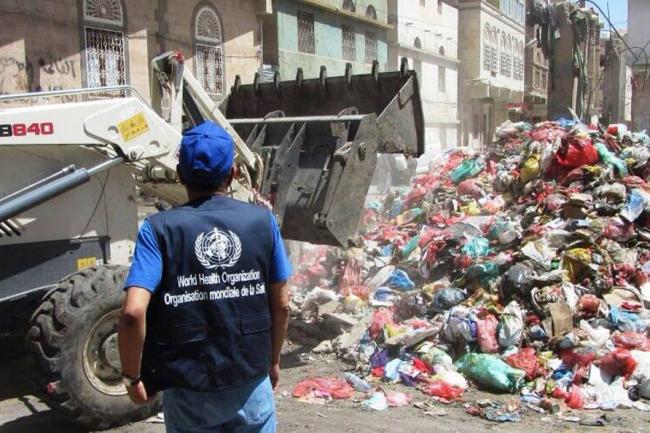
At least 3,000 suspected Dengue fever cases reported in Yemen: UN health agency
WHO spokesman Christian Lindmeier told reporters at UN headquarters in Geneva that more than 3,000 suspected cases of Dengue had been reported in Yemen since March 20 with some non-governmental organizations flagging more than 6,000 cases.
The latest development comes just days after WHO said Yemen’s health system is on the verge of breakdown. Hospitals have been destroyed, health workers killed and critical shortages of food, medical supplies and fuel are causing large-scale suffering, and it is only thanks to the heroic efforts of the country’s health workers, the resilience of its brave people and the tireless efforts of national and international humanitarian organizations that any semblance of health care is being provided.
In addition, the UN Office for the Coordination of Humanitarian Affairs (OCHA) report that health kits, IV fluids and other essential medicines have been delivered to health facilities in four governorates in Yemen in the past week, for the treatment of more than 438,000 people, including treatment of patients with dengue fever.
In Geneva today, the WHO spokesman said that Dengue fever in Yemen followed a seasonal pattern with a high number of cases being reported between April and August annually, but the conflict had led to a large increase in the number of cases reported this year.
The current crisis in Yemen had severely impacted access to water, sanitation, preventive and clinical services, and shelter in many governorates that has led to an increased risk of disease outbreaks, particularly among the internally displaced people and the large segments of the population affected by the crisis, according to Lindmeier.
“Hundreds of cases were expected in Aden alone in the coming weeks,” he said.
He also said that access to care had been severely impacted with a nearly 50 percent drop in consultations since the conflict began in 2015.
WHO said that together with Yemen’s Ministry of Health, they have developed an outbreak control and response strategy for the suspected Dengue cases, which included measures such as strengthened laboratory capacity, the provision of bed nets, insecticide and spraying equipment, and transportation and implementation.
However, “access was the biggest challenge,” Lindmeier said.
Dengue fever is a severe, flu-like illness that affects infants, young children and adults, but seldom causes death, according to a WHO factsheet, which also says there is no specific treatment for dengue fever but early detection and access to proper medical care lowers fatality rates below 1 per cent.
Photo: WHO Yemen
Support Our Journalism
We cannot do without you.. your contribution supports unbiased journalism
IBNS is not driven by any ism- not wokeism, not racism, not skewed secularism, not hyper right-wing or left liberal ideals, nor by any hardline religious beliefs or hyper nationalism. We want to serve you good old objective news, as they are. We do not judge or preach. We let people decide for themselves. We only try to present factual and well-sourced news.
Support objective journalism for a small contribution.


