


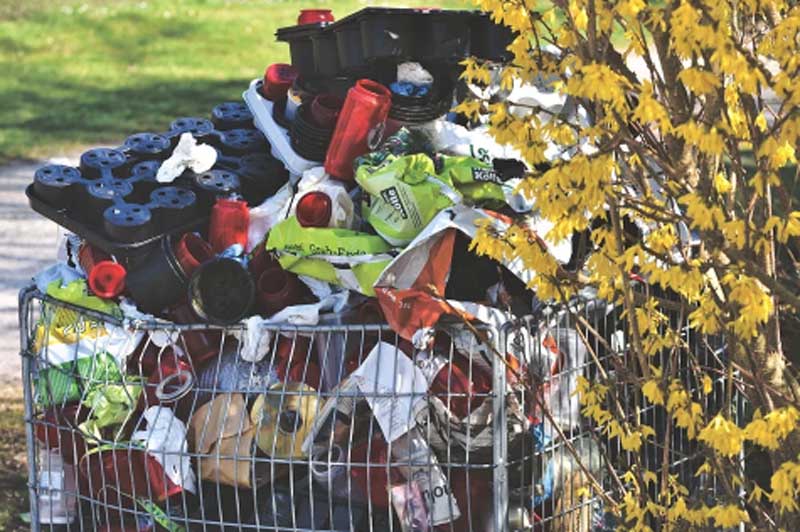
 China I Plastic Waste
Australian study finds China is the biggest generator of plastic waste
Melbourne: An Australian study has unveiled that China is the biggest generator of plastic waste.
The study said one-fifth of the world's single-use plastic came from the country in 2019.
In its inaugural Plastic Waste Makers Index published on Tuesday, the Perth-based Minderoo Foundation said: "In 2019, just 20 polymer producers accounted for more than half of all single-use plastic waste generated globally – and the top 100 accounted for 90 per cent."
"ExxonMobil and Dow – both based in the USA – top the list, followed by China-based Sinopec, with these three companies together accounting for 16 per cent of global single-use plastic waste.
"Of approximately 300 polymer producers operating globally, a small fraction hold the fate of the world’s plastics crisis in their hands: their choice to continue to produce virgin polymers, rather than recycled polymers, will have massive repercussions on how much waste is collected, is managed and leaks into the environment," the foundation said.
"Single-use plastic waste is an entrenched geopolitical problem.Transitioning away from the take-make-waste model of single-use plastics will take more than corporate leadership and “enlightened” capital markets; it will require immense political will.
"This is underscored by the high degree of state ownership in these polymer producers – an estimated 30 per cent of the sector, by value, is state-owned, with Saudi Arabia, China, and the United Arab Emirates the top three," the foundation said.
"In addition, it will likely require concerted action on the international political stage to resolve deep-rooted regional imbalances and inequities. High income countries are typically supplying low and lower-middle income countries with significant volumes of polymer; and while this latter group of countries generates far less single-use plastic waste per person, the reverse is true in terms of mismanaged waste and plastic pollution," it said.
Support Our Journalism
We cannot do without you.. your contribution supports unbiased journalism
IBNS is not driven by any ism- not wokeism, not racism, not skewed secularism, not hyper right-wing or left liberal ideals, nor by any hardline religious beliefs or hyper nationalism. We want to serve you good old objective news, as they are. We do not judge or preach. We let people decide for themselves. We only try to present factual and well-sourced news.
Support objective journalism for a small contribution.


