


Ban welcomes proposal for first binding limits on airlines' carbon emissions
A statement attributable to the UN chief's spokesperson said the proposed rules, which would limit carbon emissions and strengthen the efficiency of all new commercial and business airliners after 2028, build on the strong momentum coming from the Paris Agreement and represent the latest in a series of successful multilateral efforts to reduce the risks of dangerous climate change.
“Carbon emissions from aviation are growing rapidly, with the number of flights worldwide expected to double in the next 15 years. The ICAO's new rules come after years of negotiations and are the first time that governments have set emissions standards for the aviation industry,” the statement said.
For its part, ICAO said in a press release on Monday that the “eagerly awaited” aircraft carbon dioxide emissions standard was unanimously recommended by the 170 international experts on its Committee on Aviation Environmental Protection, paving the way for its ultimate adoption by the UN agency's 36-State Governing Council.
Under the recommendation, the new standard would be applicable to new aircraft type designs as of 2020, as well as to new deliveries of current in-production aircraft types from 2023. A cut-off date of 2028 for production of aircraft that do not comply with the standard was also recommended.
In its current form, the standard acknowledges carbon dioxide reductions arising from a range of possible technology innovations, whether structural, aerodynamic or propulsion-based.
ICAO said the proposed global standard is particularly stringent for larger aircraft, since operations of aircraft weighing more than 60 tons account for more than 90 per cent of international aviation emissions. The proposed standard, however, covers the full range of sizes and types of aircraft used in international aviation today.
“The goal of this process is ultimately to ensure that when the next generation of aircraft types enter service, there will be guaranteed reductions in international CO2 emissions,” said Olumuyiwa Benard Aliu, President of the ICAO Council.
The Montreal-based agency works with 191 Member States and industry groups to reach consensus on international standards, practices and policies for the civil aviation sector.
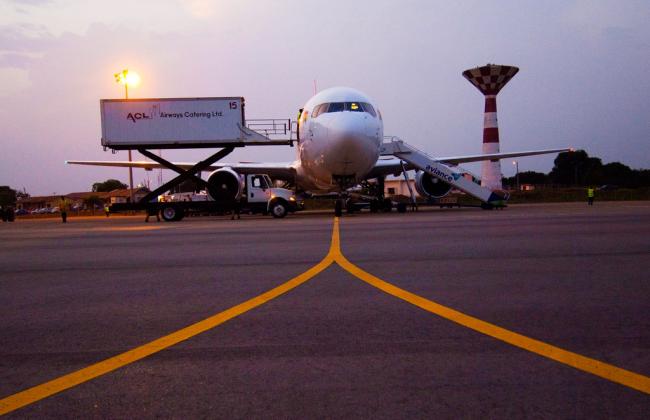
Photo: World Bank/Arne Hoel (file)
Support Our Journalism
We cannot do without you.. your contribution supports unbiased journalism
IBNS is not driven by any ism- not wokeism, not racism, not skewed secularism, not hyper right-wing or left liberal ideals, nor by any hardline religious beliefs or hyper nationalism. We want to serve you good old objective news, as they are. We do not judge or preach. We let people decide for themselves. We only try to present factual and well-sourced news.
Support objective journalism for a small contribution.


