


 WHO
WHO
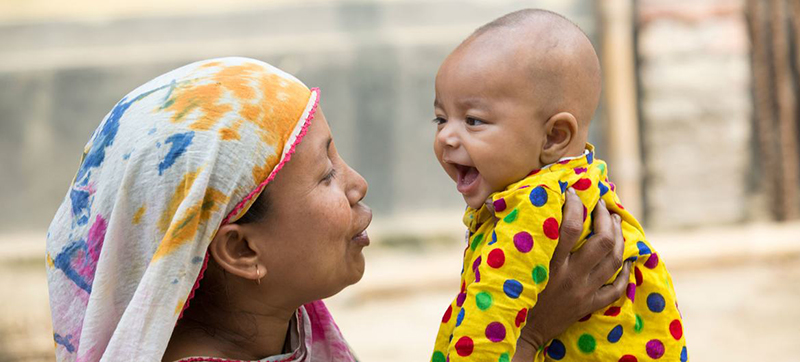
Child health: More focus needed on earliest years, urges WHO
A new progress report launched on Thursday by UN agencies highlights the need to step up investment in nurturing care – especially in the poorest and most fragile countries.
The report from the World Health Organization (WHO) and Children’s Fund UNICEF find that the first years of a child’s life provide “irreplicable opportunities to improve lifelong health, nutrition and well-being” according to a press release.
It tracks progress against the global Nurturing care framework, which provides guidance on supporting the healthy physical, intellectual, and emotional development of young children.
Protecting development
This framework promotes an integrated approach to early childhood development, covering nutrition, health, safety and security, early learning, and responsive caregiving as essential areas for interventions.
“Early childhood development provides a critical window to improve health and well-being across life with impacts that resonate even into the next generation,” said Dr. Anshu Banerjee, Director of Maternal, Newborn, Child and Adolescent Health and Ageing at WHO.
“While this report shows encouraging progress, greater investment is needed in these foundational early years so that children everywhere have the best possible start for a healthy life ahead.”
A child’s early experiences have a profound impact on their overall health and development.
They affect health, growth, learning, behaviour and, ultimately, adult social relationships, well-being, and earnings. The period from pregnancy to the age of three is when the brain develops fastest, with over 80 per cent of neural development happening during this time, said WHO.
Expanding commitment
According to the report, government efforts overall to boost early childhood development have increased since the framework was launched five years ago.
Close to 50 per cent more countries have developed related policies or plans, and services have expanded.
In a recent rapid survey, more than 80 per cent of responding countries reported training frontline workers to support families in providing early learning activities and responsive caregiving.
Children and caregivers
Increased investments are needed to scale up services and demonstrate impact, especially among vulnerable populations. Ensuring adequate support for children with developmental difficulties and addressing caregiver psychosocial wellbeing are also key, according to the report.
“To improve the health of children, we must not only focus on meeting their immediate physical needs, but also ensure they are able to learn effectively, and develop positive, emotionally rewarding relations with people around them,” said Dr. Bernadette Daelmans, Head of Child Health and Development at WHO.
Cohesive efforts are needed with dedicated financing, across a range of different sectors, the report notes, including health, education, sanitation, and protection services.
Family-friendly policies supporting equitable access to affordable, high-quality childcare are also important.
Support Our Journalism
We cannot do without you.. your contribution supports unbiased journalism
IBNS is not driven by any ism- not wokeism, not racism, not skewed secularism, not hyper right-wing or left liberal ideals, nor by any hardline religious beliefs or hyper nationalism. We want to serve you good old objective news, as they are. We do not judge or preach. We let people decide for themselves. We only try to present factual and well-sourced news.
Support objective journalism for a small contribution.


