


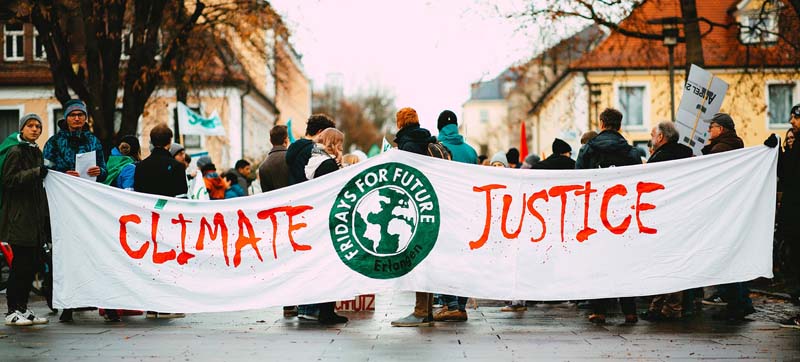
Climate litigation spikes, giving courts an ‘essential role’ in addressing climate crisis
New York: A rise in climate litigation cases has made courtrooms increasingly important as a venue for addressing climate change around the world, according to a report released on Tuesday by the UN Environment Programme (UNEP).
The UNEP Global Climate Litigation Report: 2020 Status Review, finds that climate cases have nearly doubled over the last three years and are increasingly pushing governments and corporations to implement climate commitments, while setting the bar higher for more ambitious climate change mitigation and adaptation.
“Citizens are increasingly turning to courts to access justice and exercise their right to a healthy environment”, said Arnold Kreilhuber, Acting Director of UNEP’s Law Division.
Tracking the trend
Published by UNEP in cooperation with the Sabin Center for Climate Change Law at New York’s Columbia University, the report shows climate litigation has not only become more common, but also more successful throughout the world.
In 2017, 884 climate change cases were brought in 24 countries. By the end of 2020, that number had nearly doubled, with at least 1,550 cases filed in 38 countries – 39 including the European Union’s court system.
While climate litigation continues to be concentrated in high-income countries, the report lists recent cases from Colombia, India, Pakistan, Peru, the Philippines and South Africa in projecting the trend to grow further in the Global South.
On the offence
According to the report, the background of plaintiffs is becoming increasingly diverse and includes non-governmental organizations, political parties as well as senior citizens, migrants and indigenous peoples.
Those who are particularly vulnerable to COVID-19 are the same petitioners who are often most vulnerable to climate change – enduring extreme weather, rising sea levels and high levels of pollution.
“Judges and courts have an essential role to play in addressing the climate crisis”, said Mr. Kreilhuber.
Looking ahead
In the coming years, UNEP expects climate litigation to increase, spurred by national and international bodies, especially surrounding commercially-based misreporting of climate risks, governments failing to adapt to extreme weather events and cases brought to enforce previous court decisions.
UNEP also foresees a rise in cases concerning climate change displacements.
“Climate litigation is a key lever for keeping governments and corporations on task in the fight to combat climate change”, said Michael Burger, Executive Director of the Sabin Center for Climate Change at Columbia Law School. “Courts can equalize the power imbalances in society and give force to the rule of law.”
Support Our Journalism
We cannot do without you.. your contribution supports unbiased journalism
IBNS is not driven by any ism- not wokeism, not racism, not skewed secularism, not hyper right-wing or left liberal ideals, nor by any hardline religious beliefs or hyper nationalism. We want to serve you good old objective news, as they are. We do not judge or preach. We let people decide for themselves. We only try to present factual and well-sourced news.
Support objective journalism for a small contribution.


