


Coronavirus necessitates global increase in protective equipment, medical supplies: UN health chief
New York/IBNS: The head of the World Health Organization (WHO) is calling for stepped-up production of medical equipment and supplies as health facilities and health workers in many countries struggle with increasing and urgent demands brought on by the COVID-19 pandemic.
Tedros Adhanom Ghebreyesus told journalists in Geneva on Monday that he had spoken to trade ministers from the world’s leading economic forum, the G-20, about ways to address the chronic shortage of personal protective equipment (PPE) and other essential medical supplies.
The UN health agency also is “working intensively” with several partners to massively increase access to diagnostics, PPE, medical oxygen, ventilators and other life-saving products, he added.“We call on countries to work with companies to increase production; to ensure the free movement of essential health products; and to ensure equitable distribution of those products, based on need”, Tedros said, placing specific emphasis on low and middle-income countries in Africa, Asia and Latin America.
Health care: A balancing act
Cases of the new coronavirus disease continue to mount globally, reaching nearly 700,000 on Monday, and more than 33,000 deaths.
The rapidly increasing demands of the pandemic are threatening health systems, Tedros said, because “even though we’re in the midst of a crisis, essential health services must continue”.
WHO has published guidelines to help countries balance the demands of pandemic response while maintaining essential health services which include routine vaccination, pre-natal care, and treating infectious and non-communicable diseases.
Tedros also welcomed the news that 20,000 healthcare workers in the United Kingdom have offered to return to work, while medical students and trainees in Russia are taking part in the emergency response there.
Countries coping with the COVID-19 surge can also consult a new WHO manual on setting up and managing treatment centres, including in repurposed buildings or tents.
“This is a life-saving instruction manual to deal with the surge of cases that some countries are facing right now”, the agency’s chief said.
“These facilities will also have longer-term benefits for health systems once the current crisis is over”.
The COVID-19 pandemic is highlighting the world’s inequalities and threatening to deepen them, the International Labour Organization (ILO), warned on Monday.Pandemic exposes inequalities
The UN agency finds that migrant workers and people working in the informal economy are particularly affected by the economic consequences of the disease, and women are especially exposed.
Two billion people worldwide work in in informal employment, while ILO also stressed that the policy response by government should ensure that support reaches low-wage workers, the self-employed and other vulnerable people.
An appeal for children in conflict
The UN expert on the plight of children caught in conflict has joined the Secretary-General’s call for a global ceasefire amid the pandemic.
Virginia Gamba said COVID-19 is compounding the suffering of the world’s most vulnerable people, especially those living in conflict zones.
“As borders are closing down and hostilities continue relentlessly, it is important to stand with those who are counting on us and to amplify our call for the protection of children affected by conflict; only together can we defeat this invisible threat”, she said.
UN Secretary-General António Guterres last Monday called on combatants everywhere to “end the sickness of war and fight the disease that is ravaging our world”.v
Photo catpion and credit:
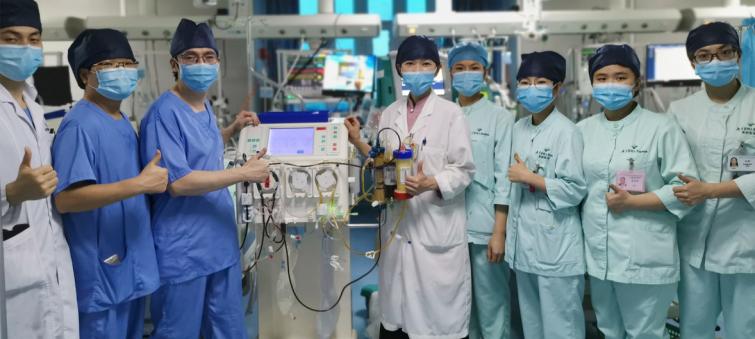
Department of Critical Care Medicine, Guangdong Medical University
Staff of the Department of Critical Care Medicine, Guangdong Medical University.
Support Our Journalism
We cannot do without you.. your contribution supports unbiased journalism
IBNS is not driven by any ism- not wokeism, not racism, not skewed secularism, not hyper right-wing or left liberal ideals, nor by any hardline religious beliefs or hyper nationalism. We want to serve you good old objective news, as they are. We do not judge or preach. We let people decide for themselves. We only try to present factual and well-sourced news.
Support objective journalism for a small contribution.


