


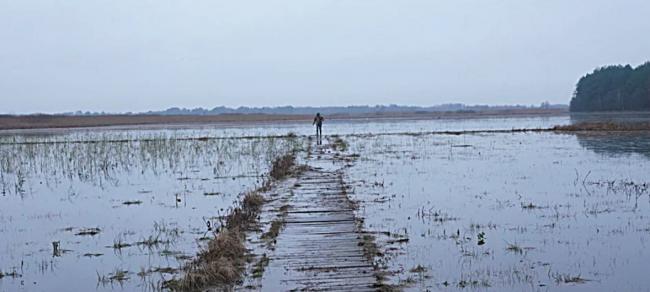
Cutting emissions, one bog at a time
New York, Nov 28 (IBNS): Farmers and entrepreneurs in rural eastern Europe are helping to tackle climate change while boosting their livelihoods as a result of regenerating ancient wetland peat bogs.
Peat is made up of decaying organic matter and, crucially, is able to absorb harmful carbon deposits which would otherwise add to carbon dioxide emissions, if released into the atmosphere.
Many of the bogs in Belarus, Ukraine and Russia, have been drained so the land can be used for commercial development, but when dry, the peat becomes highly combustible. If it catches fire, then dangerous levels of greenhouse gasses are released.
Now, local people with the support of the UN Development Programme (UNDP) and European Union, are restoring the peatlands and setting up small businesses which can operate sustainably alongside.
It’s estimated that the 30 million tons of carbon has been kept in ground thanks to their efforts, the equivalent, UNDP says, of closing 140 coal-fired energy plants.
UNDP Eurasia
Support Our Journalism
We cannot do without you.. your contribution supports unbiased journalism
IBNS is not driven by any ism- not wokeism, not racism, not skewed secularism, not hyper right-wing or left liberal ideals, nor by any hardline religious beliefs or hyper nationalism. We want to serve you good old objective news, as they are. We do not judge or preach. We let people decide for themselves. We only try to present factual and well-sourced news.
Support objective journalism for a small contribution.


