


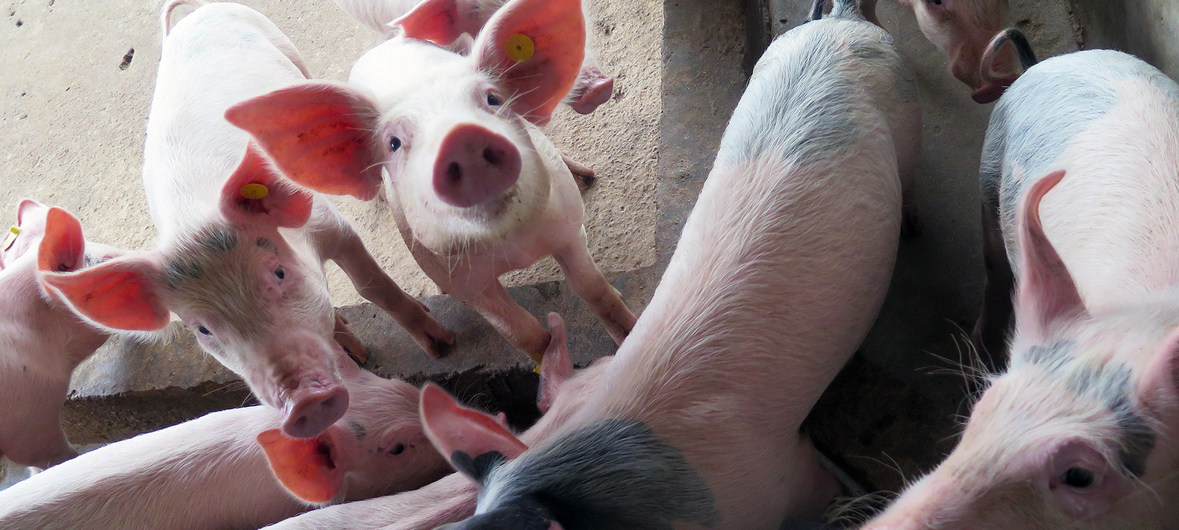
Global cooperation key to eradicating deadly pig virus: UN agency
New York: A disease that may kill every pig it infects and for which there is no effective vaccine, can be eradicated if more countries continue to work together to limit its spread, the UN Food and Agriculture Organization (FAO) said on Monday.
The joint appeal from the FAO and the World Organisation for Animal Health (OIE), comes amid an escalation of African Swine Fever (ASF) that has caused massive losses in pig populations.
Spreading risk
"In this globalised world, where diseases can spread rapidly across borders, timely sharing of latest scientific information, international collaboration and notification of ASF are needed to prevent transboundary spread and minimise impact", said FAO Deputy Director-General, Maria Helena Semedo.
Today, the virus – which cannot infect people, but which “may cause up to 100 per cent mortality in pigs” - has affected more than 50 countries from sub-Saharan African nations to Europe, Asia and the Pacific.
Most popular meat in the world
There are serious concerns about the economic impact of the disease, since pork is the most consumed meat in the world, representing more than a third of global meat consumption, according to FAO.
In a statement, FAO said that in partnership with OIE, its initiative for the Global Control of African Swine Fever sought to foster partnerships that can strengthen control measures and to minimise the impact of the disease.
Both organisations highlighted however that many countries affected by the virus “lack sufficient human, financial or technical resources to rapidly detect, respond and contain” animal diseases.
Transparent reporting
“Coordinated actions as part of the Global Initiative should take place alongside maintaining transparency regarding reporting of animal diseases and investing in strong and resilient animal health systems”, they said.
Recommended measures include improving the capability of countries to prevent, respond and eradicate the virus by adopting agreed international standards and best practices based on the latest science.
Risk communication “will be a crucial element to effectively address risk pathways and high-risk practices”, FAO and OIE noted.
They also urged countries to establish an effective method for the global control of the disease, while also ensuring support for businesses.
“Today, 51 countries are affected by African Swine Fever,” said Dr Matthew Stone, OIE Deputy Director General for International Standards and Science. “Amid the difficult situation posed by COVID-19, (it) continues to spread, intensifying the current health and socioeconomic crises."
Support Our Journalism
We cannot do without you.. your contribution supports unbiased journalism
IBNS is not driven by any ism- not wokeism, not racism, not skewed secularism, not hyper right-wing or left liberal ideals, nor by any hardline religious beliefs or hyper nationalism. We want to serve you good old objective news, as they are. We do not judge or preach. We let people decide for themselves. We only try to present factual and well-sourced news.
Support objective journalism for a small contribution.


