September 20, 2026 09:18 pm (IST)

Follow us:


Haiti: UN seeks efforts to tackle cholera
New York, Apr 2 (IBNS): The United Nations official tasked with coordinating the response to the cholera epidemic in Haiti says the country is not receiving the international attention it deserves, and is calling on the donor community to scale up support to combat the disease.
“Haiti is not receiving the attention of the international community, particularly the donor community,” Pedro Medrano told the UN News Centre, as he reported on a recent trip during which he met with officials in Canada, the United Kingdom, Belgium, France, Germany, Spain and the Netherlands.
“It is clear that this epidemic is not on their radar screen,” added Medrano, who is the Secretary-General’s Senior Coordinator for the Cholera Response in Haiti. Even if we are making progress, and we have a lower number of cases on Tuesday, we are not out of the woods.
The cholera outbreak which has affected Haiti since October 2010 is still considered the largest in the Western Hemisphere, with more than 700,000 cases and over 8,500 deaths.
Medrano travelled to the donor countries to try and raise their understanding of what the UN is attempting to do to eliminate cholera in Haiti. “I think that it is clear that any country with the number of people suffering last year – 65,000 new cases, and we have more than 700,000 cases in total – would consider this an emergency,” he added.
Since the beginning of the epidemic, the UN has initiated a system-wide effort to support the Government of Haiti in the fight against what the Senior Coordinator referred to as “a silent emergency.” In December 2012, Secretary-General Ban Ki-moon launched an initiative for the elimination of cholera in Haiti and the Dominican Republic that focuses on prevention, treatment and education.
The UN has worked with partners in the community and international groups to launch a series of actions, including establishing/upgrading cholera treatment facilities, constructing waste water treatment plants, purchasing oral cholera vaccines, and supporting community-based hygiene campaigns.
As the Special Representative of the Secretary-General in Haiti, Sandra Honoré, indicated in her recent briefing to the Security Council, “Delivering and sustaining better health requires an urgent, scaled-up effort to combat the disease and address decades of under-investment in basic systems for safe water, hygiene, sanitation and healthcare.”
According to Medrano, less than 17 per cent of the population has access to sanitation while about half of the population has access to safe drinking water. “It’s impossible to stop the transmission of cholera and other water-borne diseases without urgent interventions in water and sanitation,” he stressed. This has prompted him to call for a Marshall Plan for the Caribbean nation.
The UN system in Haiti has developed a two-year, USD 68 million initiative in support of the Government’ s 10-year National Plan for the Elimination of Cholera. In addition, the UN and the Haitian Government are finalizing the creation of a high-level committee that will oversee the coordinated implementation of the cholera response measures as contained in the National Plan.
Haiti’s Ministry of Health has a plan, with the Pan-American Health Organization (PAHO), to vaccinate 200,000 people in the next couple of months and another 300,000 before the end of the year. The issue of money along with the availability of vaccines is a major challenge. The global stockpile is not sufficient to meet the needs of 500,000 people, Medrano noted.
Countries have indicated they will consider allocations to this programme in the near future. As Medrano indicated, resources are extremely important not only for medical treatment but also for water and sanitation: “We can’t wait 5, 10 years until we have everything.”
Medrano went on to say, “There is no doubt that we have made substantial progress. Today, we have fewer cases of cholera than we had in previous years. The figures from January and February 2014 show that there were 1,400 new cases – the lowest number of new cases since the epidemic began.”
The Senior Coordinator was quick to note that there was no room for complacency. “Even if we are making progress, and we have a lower number of cases today, we are not out of the woods.”
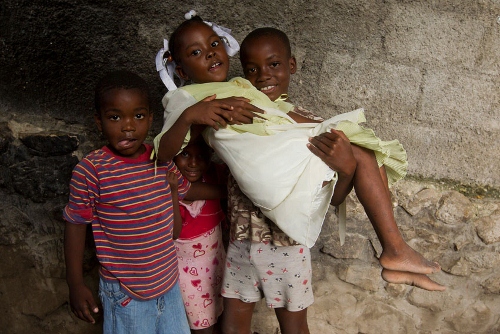
(The cholera outbreak which has affected Haiti since October 2010 appears to have abated but is still considered the largest in the Western Hemisphere. Photo Logan Abassi UN/MINUSTAH)
Support Our Journalism
We cannot do without you.. your contribution supports unbiased journalism
IBNS is not driven by any ism- not wokeism, not racism, not skewed secularism, not hyper right-wing or left liberal ideals, nor by any hardline religious beliefs or hyper nationalism. We want to serve you good old objective news, as they are. We do not judge or preach. We let people decide for themselves. We only try to present factual and well-sourced news.
Support objective journalism for a small contribution.


Latest Headlines