


Insights on fast cockroaches can help teach robots to walk, says study
New York, Dec 8 (IBNS):First-time evidence that fast insects can change their gait like a mammal’s transition from trot to gallop
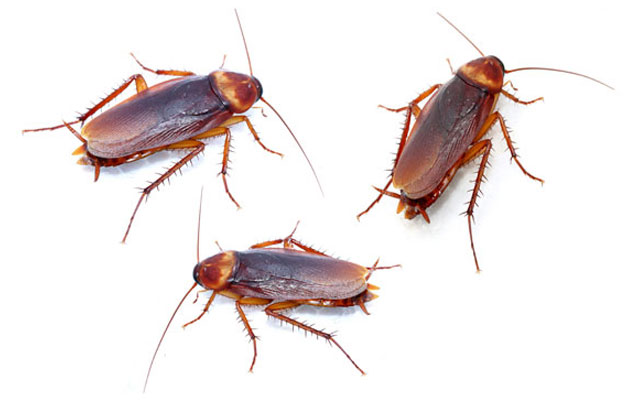
Using the example of cockroaches, the Cologne-based zoologist Dr. Tom Weihmann and his team were able to show that quickly running insects change their gait at mid-speed.
This behavior has previously only been observed in fast mammals. This change in gait is similar to the way horses change from trop to gallop.
The results of the study have now been published in the journal Frontiers in Zoology.
‘I was particularly surprised that a change in mechanisms stabilizing the animal’s movement goes hand in hand with a change in leg coordination’, Weihmann notes. An insect’s slow run is very stable because its centre of gravity is low and three legs are always moving in a coordinated manner. The research showed that the change in gait at high speed and on a slippery surface was accompanied by a change from static to dynamic stabilization. This minimizes the need of the central nervous system to control the motion while attaining high energy efficiency.
‘This discovery not only has far-reaching implications regarding the behavior and ecology of insects and other arthropodes’, says Weihmann. ‘Our results can also contribute to solving some problems we still have with the movement of robots.’
Robots with legs generally have better cross-country mobility than robots with wheels. Particularly at high running speeds, however, robots use up a lot of energy – in contrast to many animals. Thus, the cockroaches’ locomotion pattern could contribute to finding a solution that would let robots run at a high speed with an acceptable expenditure of energy. ‘Robots with legs that can be used here on Earth after disasters, or on Mars or other planets, are often modeled on insects’, Weihmann explains. ‘Adapting the coordination patterns of robot legs to those of fast-running cockroaches can help the robot use energy more efficiently and hence increase its endurance in an inhospitable environment.’
The scientists used the organism Nauphoeta cinerea to study its locomotion on slippery and non-slippery surfaces. The results showed that at high speed, the animals reduce the degree to which their legs move in a synchronized manner. This allowed them to avoid disruptions in their coordination or falls even on slippery surfaces.
Support Our Journalism
We cannot do without you.. your contribution supports unbiased journalism
IBNS is not driven by any ism- not wokeism, not racism, not skewed secularism, not hyper right-wing or left liberal ideals, nor by any hardline religious beliefs or hyper nationalism. We want to serve you good old objective news, as they are. We do not judge or preach. We let people decide for themselves. We only try to present factual and well-sourced news.
Support objective journalism for a small contribution.


