


Microplastics, microbeads and single-use plastics poisoning sea life and affecting humans
New York/IBNS: Each year, an estimated eight million tonnes of plastic end up in the ocean – equivalent to a full garbage truck dumped into the sea every minute - the United Nations Environment Programme (UNEP) said on Monday.
Between 60 to 90 per cent of the litter that accumulates on shorelines, the surface and the sea floor is made up of plastic.
The most common items are cigarette butts, bags, and food and beverage containers. Consequently, marine litter harms over 800 marine species, 15 of which are endangered. And plastic consumed by marine species enters the human food chain through fish consumption.
Alarmingly, in the last 20 years, the proliferation of microplastics, microbeads and single-use plastics have made this problem even more pronounced.
Most people associate marine plastic pollution with what they can see along coastlines or floating on sea surfaces. But microplastics and microbeads pose a hidden challenge as they are out of sight and, therefore, out of mind.
“What’s in Your Bathroom?”, UNEP asked on Monday, as part of a campaign to raise awareness on the harm caused by plastics in personal care products and shifts that can be made to reduce plastic footprints.
UNEP launched the Clean Seas Campaign in 2017 to galvanize a global movement that tackles single-use plastics and microbeads.
Now in its second phase, it is shining a light on specific aspects of marine litter, such as plastic pollution generated by the cosmetic industry.
Many consumers are not aware just how much plastic there may be in the personal care items they use daily on their faces and bodies.
From the plastic in packaging to the under-5mm microplastics hidden within the products, including beads or glitter, they are designed to wash down the drain, travel through rivers and ultimately end up in the sea.
Microplastics are too small to be filtered out by waste treatment plants and attract waterborne toxins and bacteria that stick to their surfaces. Because they look like food, they are eaten by fish, amphibians, insect, larvae and marine animals as well as seabirds and other marine life, blocking digestive tracts and causing physical problems.
In addition to endangering marine life, the health implications of microplastics on humans are not yet fully known, but considering their prevalence in clothes, food, water and cosmetics, are expected to be far reaching.
For the next week, UNEP is inviting consumers everywhere to examine products in their bathrooms and switch out those with microplastics for safer alternatives.
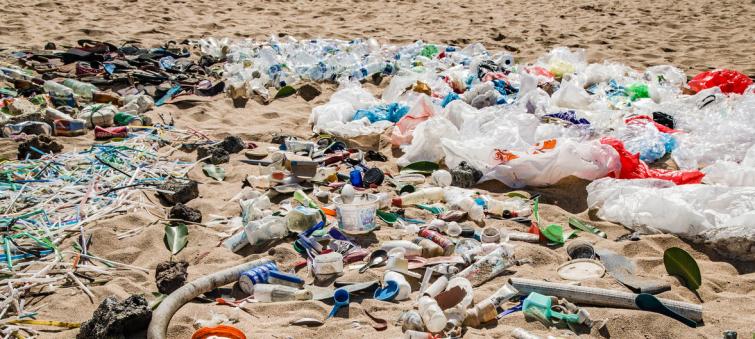
Photo caption and credit:
UNEP/Shawn Heinrichs
Trash at a beach in Bali where the UN Environment Programme launched the Clean Seas Campaign.
Support Our Journalism
We cannot do without you.. your contribution supports unbiased journalism
IBNS is not driven by any ism- not wokeism, not racism, not skewed secularism, not hyper right-wing or left liberal ideals, nor by any hardline religious beliefs or hyper nationalism. We want to serve you good old objective news, as they are. We do not judge or preach. We let people decide for themselves. We only try to present factual and well-sourced news.
Support objective journalism for a small contribution.


