October 16, 2026 12:23 pm (IST)

Follow us:


Most cities fail to meet new pollution guidelines: UN
New York, May 8 (IBNS): Many of the world's cities are "enveloped in dirty air" that is dangerous breathe, the United Nations World Health Organization (WHO) said on Wednesday, warning that urban dwellers are being exposed to excessive air pollution and are at a risk of respiratory diseases and other long-term health problems.
Air quality in most urban areas worldwide that monitor outdoor air pollution fails to meet WHO safety guidelines, putting people at additional of serious health problems, the agency said in a press release issued along with its 2014 urban ambient air quality database.
The agency says the new information calls for greater awareness of health risks caused by air pollution, implementation of effective air pollution mitigation policies, and close monitoring of the situation in cities worldwide.
The WHO database covers 1600 cities across 91 countries – 500 more cities than the previous database (2011), revealing that more cities worldwide are monitoring outdoor air quality, reflecting growing recognition of air pollution’s health risks.
According to the database, only 12 per cent of the people living in cities reporting on air quality reside in cities where that air quality complied with WHO guideline levels. About half of the urban population being monitored is exposed to air pollution that is at least 2.5 times higher than the levels WHO recommends - putting those people at additional risk of serious, long-term health problems.
In most cities where there is enough data to compare the situation on Wednesday with previous years, air pollution is getting worse. Many factors contribute to this increase, including reliance on fossil fuels such as coal fired power plants, dependence on private transport motor vehicles, inefficient use of energy in buildings, and the use of biomass for cooking and heating.
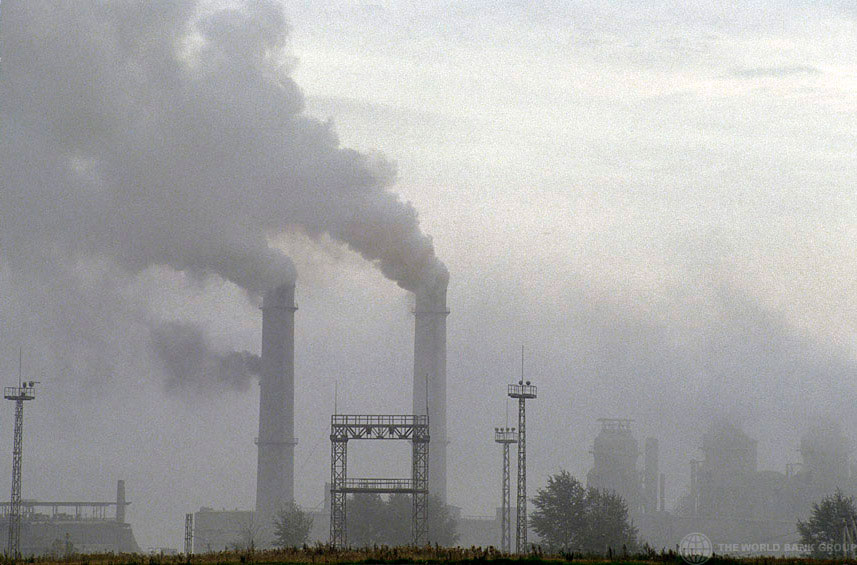
“Too many urban centres on Wednesday are so enveloped in dirty air that their skylines are invisible,” said Dr. Flavia Bustreo, WHO Assistant Director-General for Family, Children and Women's Health.
“Not surprisingly, this air is dangerous to breathe. So a growing number of cities and communities worldwide are striving to better meet the needs of their residents - in particular children and the elderly."
Some cities are making notable improvements - demonstrating that air quality can be improved by implementing policy measures such as banning the use of coal for “space heating” in buildings, using renewable or “clean” fuels for electricity production, and improving efficiency of motor vehicle engines.
“We can win the fight against air pollution and reduce the number of people suffering from respiratory and heart disease, as well as lung cancer,” said Dr. Maria Neira, WHO Director for Public Health, Environmental and Social Determinants of Health.
“Effective policies and strategies are well understood, but they need to be implemented at sufficient scale. Cities such as Copenhagen and Bogotà, for example, have improved air quality by promoting ‘active transport’ and prioritizing dedicated networks of urban public transport, walking and cycling,” she adds.
The report notes that individual cities can take local action to improve air quality and thus go against regional trends. And good air quality can go hand in hand with economic development, as indicated by some major cities in Latin America which meet, or approach, the WHO air quality guidelines.
“We cannot buy clean air in a bottle, but cities can adopt measures that will clean the air and save the lives of their people,” said Dr. Carlos Dora, Coordinator, Interventions for Healthy Environments, WHO Department of Public Health, Environmental and Social Determinants of Health.
(Air pollution now linked to 1 in 8 deaths worldwide. Photo: World Bank/Curt Carnemark)
Support Our Journalism
We cannot do without you.. your contribution supports unbiased journalism
IBNS is not driven by any ism- not wokeism, not racism, not skewed secularism, not hyper right-wing or left liberal ideals, nor by any hardline religious beliefs or hyper nationalism. We want to serve you good old objective news, as they are. We do not judge or preach. We let people decide for themselves. We only try to present factual and well-sourced news.
Support objective journalism for a small contribution.


Latest Headlines
Think planes are the problem? Rotting food waste emits 5 times more greenhouse gases, finds study
Tue, Oct 06 2026
Global whale conservation in focus as India makes key pitch at IWC-70. All details here
Mon, Sep 28 2026
Nepal avalanche horror: 4 bodies recovered, 12 remain missing
Mon, Sep 28 2026
Nepal: Avalanche strikes Himlung Himal base camp, 10 feared missing
Sun, Sep 27 2026
India, Nepal, China to join hands? Balen Shah’s big Himalayan climate proposal at UNGA
Fri, Sep 25 2026