


NASA, Smithsonian’s National Air and Space Museum host discussion on solar hazards in exploration
Veteran NASA astronaut John Grunsfeld and solar experts will discuss that and more during a panel discussion at 1 p.m. EDT, Tuesday, Oct. 25.
The event will air live on NASA Television and stream on the agency’s website.
The panel discussion will take place at the National Air and Space Museum’s Moving Beyond Earth gallery at 6th Street and Independence Avenue S.W. in Washington, read the NASA website.
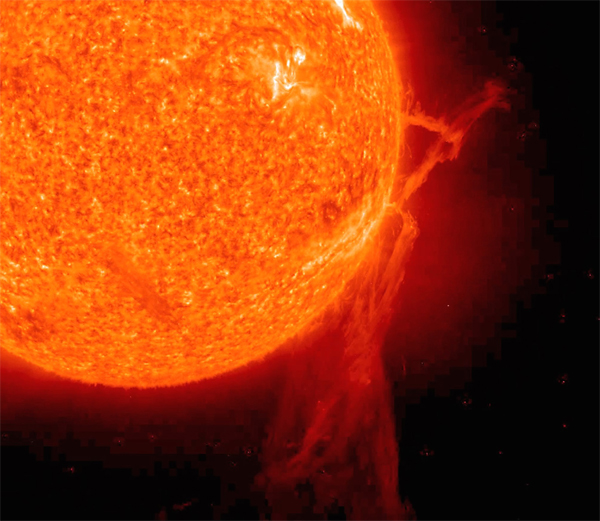
The event also will mark the 10th anniversary of the launch of NASA’s two Solar TErrestrial RElations Observatory (STEREO) spacecraft.
The twin probes have advanced space weather forecasting more than any other spacecraft or solar observatory and enabled previously impossible early warnings of threatening conditions posed by the sun.
Image credit: NASA
Support Our Journalism
We cannot do without you.. your contribution supports unbiased journalism
IBNS is not driven by any ism- not wokeism, not racism, not skewed secularism, not hyper right-wing or left liberal ideals, nor by any hardline religious beliefs or hyper nationalism. We want to serve you good old objective news, as they are. We do not judge or preach. We let people decide for themselves. We only try to present factual and well-sourced news.
Support objective journalism for a small contribution.


