


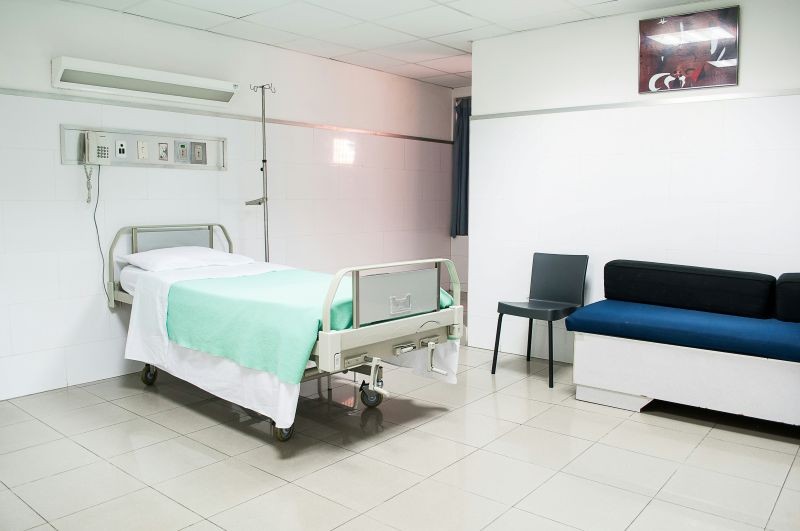
 Private Hospitals
Private hospitals in India will increase their capacity by over 4,000 beds next fiscal: Crisil Ratings
Private hospitals in India will increase their capacity by over 4,000 beds next fiscal, at an investment of Rs 11,500 crore, after an aggressive addition of around 6,000 beds this fiscal, as per data released by Crisil Ratings on Sunday.
The Crisil Ratings, a credit ratings firm, said the bed addition in just these two fiscals will equal those added between fiscals 2020 and 2024.
A Crisil Ratings analysis of 91 private hospitals, with a combined revenue of about Rs 64,000 crore last fiscal, indicates as much.
"For the record, private hospitals account for 63% of the sectoral revenue in India. Over fiscals 2020-2024, private hospitals clocked a compound annual growth rate of 18% in revenue and healthy operating profitability of 18%, ensuring strong cash flow," the credit ratings firm said.
"Their strong performance and the relatively low bed capacity per person in India vis-a-vis developed and developing nations has spurred substantial investments through private equity and initial public offerings (IPOs). This has strengthened balance sheets and enabled hospitals to pursue ambitious bed additions without materially impacting their credit profiles," it said.
Says Anuj Sethi, Senior Director, Crisil Ratings, “With occupancy close to the peak of 65-70% and continued demand for quality healthcare, private hospitals are investing ~Rs 25,000 crore this fiscal and the next, nearly 80% higher than the average annual investment in the previous four fiscals. Three-fourths of the capex will be funded through internal accruals. Plus, healthy return metrics have attracted a substantial investment of Rs 55,000-60,000 crore from private equity and equity markets since fiscal 2022.”
Crisil Ratings said half of the new beds will come from greenfield expansions, highlighting significant investment in new healthcare infrastructure.
About 40% will comprise brownfield development, focusing on modernising and optimising existing facilities.
"The remaining 10% will result from large players taking over under-construction hospitals and small and mid-sized hospitals, reinforcing organic growth efforts," the credit ratings firm said.
Naren Kartic.K, Associate Director, Crisil Ratings, said: “The large proportion of greenfield expansion poses risks related to timely completion and ramp-up in occupancies. However, given that ~70% of these projects are in metropolitan/Tier 1 cities, where hospitals reach optimal occupancy and breakeven in 12-15 months, the pressure on profitability and associated return metrics is likely to be limited. Moreover, recent equity raises have strengthened balance sheets, allowing for absorption of capex debt without materially impacting debt protection metrics.”
Support Our Journalism
We cannot do without you.. your contribution supports unbiased journalism
IBNS is not driven by any ism- not wokeism, not racism, not skewed secularism, not hyper right-wing or left liberal ideals, nor by any hardline religious beliefs or hyper nationalism. We want to serve you good old objective news, as they are. We do not judge or preach. We let people decide for themselves. We only try to present factual and well-sourced news.
Support objective journalism for a small contribution.


