


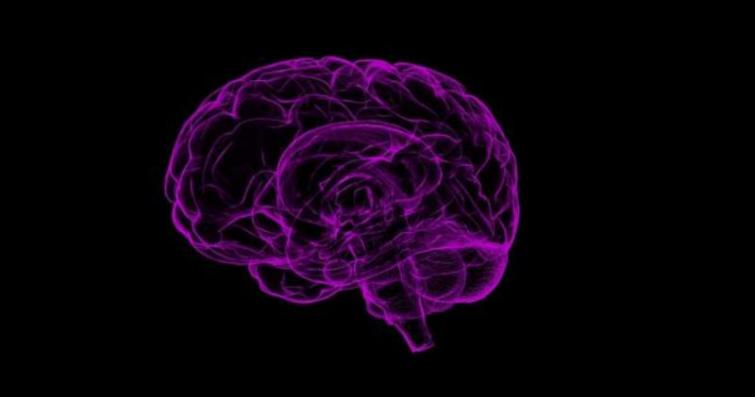
Rhythmic control of 'brain waves’ can boost memory: Study
Birmingham, June 6 (IBNS): Controlling the frequency of ‘brain waves’ could help to improve people’s recall of memories and potentially provide a key to unlock conditions such as Alzheimer’s disease, according to a new article.
Brain oscillations occur during neural processes that are relevant for memory and using different approaches to drive these brain waves demonstrates a direct link to improving memory.
Neuroscientists at the University of Birmingham have reviewed research in the field and conclude that memory performance can be improved by rhythmic neural stimulation or ‘entrainment’ – using a range of invasive and non-invasive techniques.
Working with partners at Ruhr University Bochum, in Germany and Emory University Hospital, Atlanta, USA, they published their findings in a review article for the journal Trends in Neurosciences.
Dr Simon Hanslmayr, from the University of Birmingham’s Centre for Human Brain Health, commented: “We can modulate memory performance via rhythmic neural stimulation, which can be as simple as flickering a light at a particular rhythm which then is followed by neurons in the brain."
“Much more research will be required, but it seems clear that driving brain rhythms in such a way is a promising tool for improving memory – both for healthy people and for patients suffering from conditions such as Alzheimer’s disease.”
Brain waves can be controlled in a number of ways. They can be modulated using sounds and images, as well as non-invasive electrical and electro-magnetic oscillations. Neural oscillations can also be controlled using deep-brain electrical stimulation.
The researchers note that brain oscillations act on specific neural mechanisms affecting the formation, maintenance, consolidation and retrieval of memories. Investigating how these mechanisms are affected by brain oscillations will be vital in developing effective treatments of memory-related disorders.
Support Our Journalism
We cannot do without you.. your contribution supports unbiased journalism
IBNS is not driven by any ism- not wokeism, not racism, not skewed secularism, not hyper right-wing or left liberal ideals, nor by any hardline religious beliefs or hyper nationalism. We want to serve you good old objective news, as they are. We do not judge or preach. We let people decide for themselves. We only try to present factual and well-sourced news.
Support objective journalism for a small contribution.


