


Rights to safe water, sanitation must not remain mirage for millions of Kenyans: UN expert
“Kenya is in a critical transitional moment for the provision of water and sanitation,” Catarina de Albuquerque, the Special Rapporteur on the human right to safe drinking water and sanitation, said in a statement. “Kenya is often invoked as a model at the international level due to the constitutional recognition of water and sanitation as human rights.
"However, there is still a long way to go to realize the human rights to water and sanitation for all. Much more has to be done to translate the law into reality for the millions of Kenyans for whom these human rights are still only a mirage.”
Following her 22 to 28 July visit, de Albuquerque urged the Parliament to adopt the Water Bill, and the Government to subsequently develop a new national water and sanitation strategy, which should be translated into real action at the county level.
A news release on the visit noted that only 30 per cent of Kenya’s population has access to improved sanitation, while 13 per cent of people still have no choice but to defecate in the open. “This is a daily indignity for over 6 million people,” said the expert.
In Turkana county, which de Albuquerque visited during her mission, over 80 per cent of the population practice open defecation.
“This is not only an absolute denial of the right to sanitation, but also a serious threat to public health and the security of women and girls who have to walk into the bush at night. These women and girls are exposed to daily risks due to the lack of proper sanitation,” she stressed.
“Realizing human rights costs money. Without dedicated budgets for sanitation, water and hygiene, the constitutionally recognized rights to water and sanitation will never materialize,” she added.
“By investing in sanitation, Kenya would make significant economic gains,” stated the expert, noting that the country loses at least $330 million every year due to premature death, health care costs and productivity losses resulting from the lack of access to adequate sanitation.
“This is the moment to make it happen. The Kenyan Government must seize the opportunity. The rights to water and sanitation should not remain a dream for so many.”
Independent experts or special rapporteurs are appointed by the UN Human Rights Council to examine and report back on a country situation or a specific human rights theme. The positions are honorary and the experts are not UN staff, nor are they paid for their work.
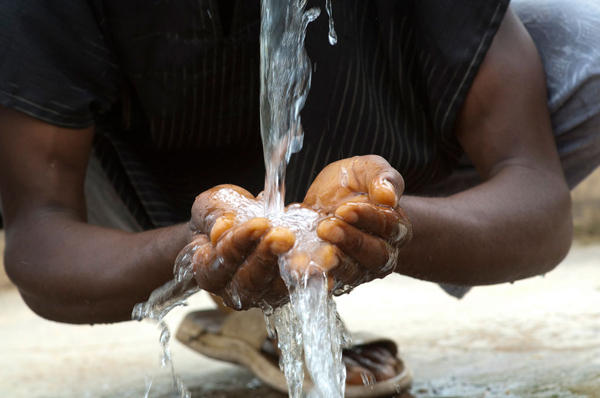
Drinking clean water. Photo: World Bank/Arne Hoel
Support Our Journalism
We cannot do without you.. your contribution supports unbiased journalism
IBNS is not driven by any ism- not wokeism, not racism, not skewed secularism, not hyper right-wing or left liberal ideals, nor by any hardline religious beliefs or hyper nationalism. We want to serve you good old objective news, as they are. We do not judge or preach. We let people decide for themselves. We only try to present factual and well-sourced news.
Support objective journalism for a small contribution.


