


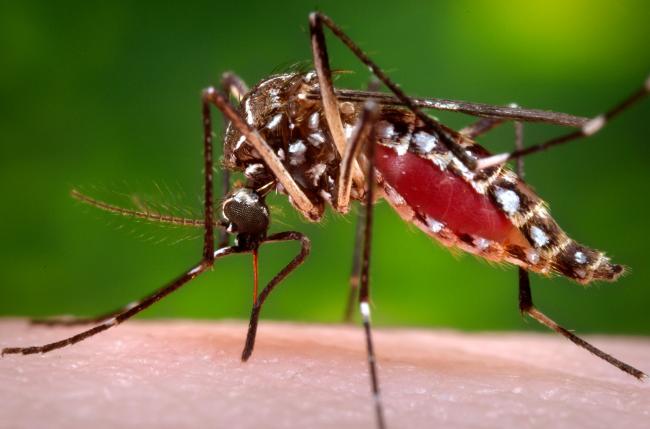
Southern Europe risks Zika outbreaks this summer, says study
This according to a study, led by Umeå University researchers and published in the journal EBioMedicine.
We know warm climates create the kind of conditions suitable for mosquito-borne illnesses to spread,” says Joacim Rocklöv, researcher at Umeå University’s Unit for Epidemiology and Global Health and co-author of the article.
“Vectorial capacity depends on a number of parameters but in general, warmer temperatures increase the rate in which the female mosquitos bite, the mosquito virus reproduction, and their virus transmission risk. The presence of established Aedes mosquito populations, the warmer climate and the coinciding peak flow of air travelers into Europe, is a triage making Southern Europe fertile ground for Zika.”
Following a similar epidemiological study conducted on the similar dengue virus, the group of researchers led by Joacim Rocklöv at Umeå University, used a temperature dependent computer model to predict Zika virus infection risks for Europe. The research exploration was undertaken in close collaboration with the European Centre for Disease Prevention and Control (ECDC).
In the analysis, the researchers overlaid data on monthly flows of airline travelers arriving in European cities from Zika-affected areas, data on month-by-month estimates of virus infection reproduction capabilities of Aedes-mosquito populations in Europe, and human population data within the areas where mosquito-borne transmission of the Zika virus could be possible.
Image: UN
Support Our Journalism
We cannot do without you.. your contribution supports unbiased journalism
IBNS is not driven by any ism- not wokeism, not racism, not skewed secularism, not hyper right-wing or left liberal ideals, nor by any hardline religious beliefs or hyper nationalism. We want to serve you good old objective news, as they are. We do not judge or preach. We let people decide for themselves. We only try to present factual and well-sourced news.
Support objective journalism for a small contribution.


