


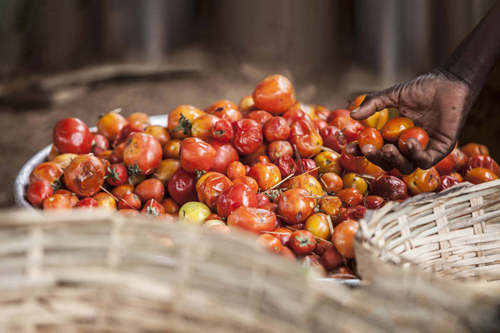
UN expert panel urges collective action to reduce global food losses, waste
Recently, global food losses and waste has become a high visibility issue and according to the UN Food and Agricultural Organization (FAO), “globally around one-third of food produced is lost or wasted along the food chain, from production to consumption.”
Food loss and waste not only impacts food security and nutrition but also the sustainability of food systems – that ensure sufficient, quality food for this and future generations, says the new report.
“FLW [food loss and waste] are consequences of the way food systems function, technically, culturally and economically,” explains the High Level Panel of Experts (HLPE) of the Committee on World Food Security (CFS) in its report, Food Losses and waste in the context of sustainable food systems, which will see its official launch on Thursday at FAO headquarters in Rome.
Adopting a systemic perspective, the report analyzes FLW impacts on the sustainability of food systems, security and nutrition by reviewing the wide range of causes.
“Reducing food losses and waste are essential to improving food security and diminishing the environmental footprint of food systems,” the report affir
It also provides action-oriented recommendations for Governments, companies and individuals to tackle the problem, includes numerous examples and proposes a “way forward” for actors to build strategies to reduce FLW in diverse contexts and situations.
According to the report, “all stakeholders should improve communication, coordination and recognition of efforts needed/made at one stage to reduce FLW at another (downstream or upstream).”
The Committee on Food Security (CFS) is the top international and intergovernmental platform for discussions and agenda-setting on issues related to global food security. Its membership includes Governments, UN agencies and other UN bodies, civil society and non-governmental organizations, research institutions, financial institutions and development banks, private sector associations and philanthropic foundations.
The High-Level Panel of Experts is an independent scientific panel that provides the CFS with scientific, knowledge-based analysis and advice on food security and nutrition policy issues.
Almost one-third of food produced for human consumption – approximately 1.3 billion tonnes per year – is either lost or wasted globally. Photo: FAO/Giulio Napolitano
Support Our Journalism
We cannot do without you.. your contribution supports unbiased journalism
IBNS is not driven by any ism- not wokeism, not racism, not skewed secularism, not hyper right-wing or left liberal ideals, nor by any hardline religious beliefs or hyper nationalism. We want to serve you good old objective news, as they are. We do not judge or preach. We let people decide for themselves. We only try to present factual and well-sourced news.
Support objective journalism for a small contribution.


