


World Bank says Ebola puts future prosperity of Liberia, Sierra Leone 'at high risk'
“[Ebola’s] socio-economic side effects put the current and future prosperity of households in Liberia and Sierra Leone at high risk,” said Ana Revenga, Senior Director for Poverty at the World Bank Group. “We must pay careful attention to those who are most vulnerable to both health and economic shocks, and ensure that they are supported throughout and after the crisis.”
The Liberian economy continues to shed jobs faster than they are replaced, with nearly half of household heads still out of work despite response-related jobs becoming available in construction and health fields. Most job losses are among private sector wage workers in urban areas, with women reported to be particularly vulnerable to the stagnant labour market, as they are disproportionately employed in non-farm self-employment.
In Sierra Leone, the first round of data collection found wage and non-farm self-employed workers seeing the largest declines in urban employment, with Ebola cited as the main cause. An estimated 179,000 people had stopped working outside of the agriculture sector. Most job losses were attributed to preventive efforts to limit the disease’s spread and to the general economic disruption caused by the outbreak, with quarantined and non-quarantined districts describing similar impacts.
The two reports found food insecurity persisting in both countries, with two-thirds of Liberian households reporting a lack of money to afford rice, regardless of price, three quarters indicating they worried about having enough to eat, and 80 per cent citing lack of money rather than availability or high prices.
No evidence was found on Ebola’s direct negative impacts on agriculture in Sierra Leone but harvest activities there were ongoing and future surveys are planned which will track any Ebola-related effects if and when they arise.
Over 80 per cent of those responding to the mobile phone survey in Liberia reported reduced harvests compared to last year, with the main concern the inability to organize work teams given Ebola fears. The same issue was cited as the main reason for incomplete harvests.
The survey showed some evidence of reduced use of health services for non-Ebola conditions in the Sierra Leonean capital, Freetown, with a much lower proportion of women reporting for post-natal clinic visits there compared to 2013. Elsewhere in the country there was little evidence of such a decline.
“From a poverty perspective, we are particularly concerned about households being forced into coping strategies that may harm their long term prospects to improve welfare, and now we can follow this in almost real time,” said Kristen Himelein, the World Bank Group’s poverty economist for Liberia and Sierra Leone.
“These high frequency surveys have been enormously helpful in bridging the gap between country-level growth analysis and the observations from those on the ground as part of the response,” she added.
The surveys are part of the World Bank’s $1 billion outbreak response and complement previous analysis that pointed to a possible $32.6 billion regional economic impact, which could catastrophic for these already fragile States. The surveys will continue in both countries, monitoring Ebola’s effects on economies and households and aiming to help Governments tackle the most pressing economic issues and plan the recovery.
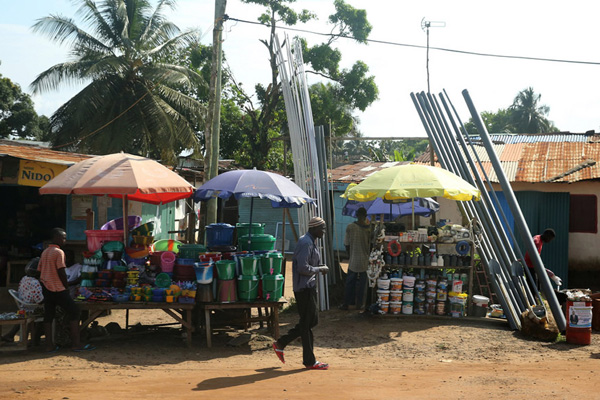
Daily life in Monrovia, Liberia, where, along with Sierra Leone, The World Bank says the socio-economic impacts of Ebola are far-reaching and persistent. Photo: World Bank/Dominic Chavez
Support Our Journalism
We cannot do without you.. your contribution supports unbiased journalism
IBNS is not driven by any ism- not wokeism, not racism, not skewed secularism, not hyper right-wing or left liberal ideals, nor by any hardline religious beliefs or hyper nationalism. We want to serve you good old objective news, as they are. We do not judge or preach. We let people decide for themselves. We only try to present factual and well-sourced news.
Support objective journalism for a small contribution.


