Education is key to reduce child marriage: CRY
According to the recent National Family Health Survey (NFHS-4, 2015-16) data, 39.1% of women within the age-group of 20-24 years are married before 18 years.
In simpler terms, 2 of every 5 adolescent girls are married off before they complete their higher secondary education.
A comparative analysis done by CRY – Child Rights and You, the trend recorded by two consecutive National Family Health Surveys (NFHS-3, 2005-06 and NFHS-4, 2015-16) reveals that the state has registered an improvement of 20 percentage points in under-age marriage over the last decade, as the findings of NFHS-3 recorded that 60.3% of women within the age-group of 20-24 years were married within their teens.
More worryingly, 12.2% of women within the age-group of 15-19 years were already mothers or pregnant at the time of the survey.
As per District Level Household Survey data (DLHS-4, 2015-16), the status of child marriage in the intervention areas of CRY-supported projects in Bihar, Supaul had the highest percentage of underage married, closely followed by Begusarai, Jamui, Samastipur and Gaya districts. Supaul accounted for more than 56% of girl child marriage, while Begusarai (53.2%), Jamui (50.8%), Samastipur (49.6%) and Gaya (47.6%) closely followed.
a more positive note, as the state government has recently announced the launch of a full-fledged state-wide campaign against child marriage and dowry system prevalent in the society.
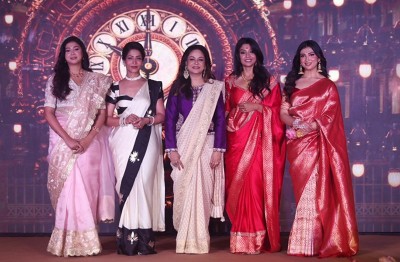
Welcoming the govt. decision Mohua Chatterjee, Program Head, CRY (Eastern Region) said, “It’s indeed a positive move, as the government has actually taken into cognizance the gravity of child marriage situation in the state.” According to her, “Education can significantly play the role of a game-changer when it comes to adolescent girls getting married off and bearing children before they are prepared, both physically and mentally.”
“As the latest Census (2011) data reveals, there are over 13 million adolescent girls who are married between 10 to 19 years of age and a startling 3.8 million adolescent girls in India have children and are shouldering the responsibilities of motherhood. Of these 3.8 million underage mothers 1.4 million had 2 or more children, even before completing adolescence. A brief analysis of their education profile reveals that, 39% of girls who were illiterate had begun child bearing, compared to 26% among the girls who were literate, proving that even a little education goes a long way in empowering girls,” she added.
According to Ms. Chatterjee, “lack of access to school is a big reason why girls are often dropped out at the secondary and higher secondary levels. To address the issue, the state govt. should set up a residential school for girls’ at each block of all districts.”
“While the campaign shows a strong political will and commitment towards the issue of child marriage, there is a need to direct this campaign towards developing and strengthening women’s agency and ensuring their access to all kinds of benefits, rights, entitlements, decision making – not only to reduce child marriage but also to bring in change in quality of lives for the girls and children,” she added.
According to CRY, adequate focus on gender budget, and stringent monitoring of utilisation of resources can go a long way in empowering the girl child.
Saradindu Bandhopadhyay, State-Lead of Bihar Operations at CRY (Eastern Region) said, “Following the mandate of Integrated Child Protection Scheme (ICPS), formation and strengthening of Child Protection Committees (CPC) at the GP and block level needs immediate attention, and these units would have to be accountable to address issues related to child marriage.”
He further insisted that, “to address the issue of child marriage on a sustainable basis, the need of the hour is to ensure inter-departmental convergence where schools, ICDS, and panchayati-raj institutions need to play a pivotal role.”
Support Our Journalism
We cannot do without you.. your contribution supports unbiased journalism
IBNS is not driven by any ism- not wokeism, not racism, not skewed secularism, not hyper right-wing or left liberal ideals, nor by any hardline religious beliefs or hyper nationalism. We want to serve you good old objective news, as they are. We do not judge or preach. We let people decide for themselves. We only try to present factual and well-sourced news.
Support objective journalism for a small contribution.