 South Sudan Schools
Joy in South Sudan, as schools reopen after 14-month COVID lockdown
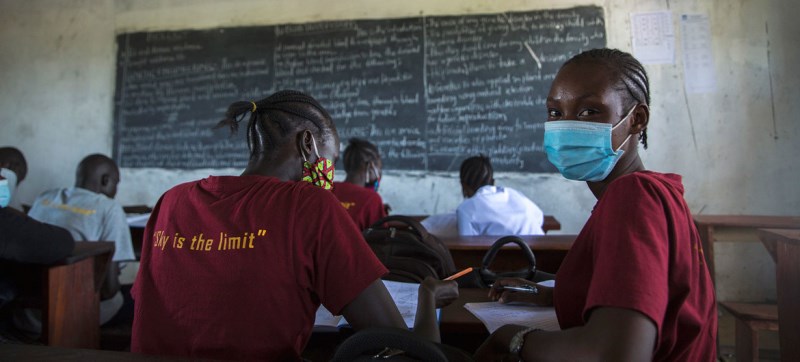
New York: The countrywide reopening of schools in South Sudan is a welcome step on the road to “normalcy” for youngsters, two in three of whom need humanitarian assistance, the UN Children’s Fund (UNICEF) said on Tuesday.
Describing the “joy” felt by children and aid workers as classrooms reopened on Monday after more than 14 months of COVID-19 restrictions, Mads Oyen, UNICEF’s chief of field operations, explained that going back to school was about more than just learning.
“Especially in a country like South Sudan, where we’re also faced with humanitarian emergencies in many parts of the country”, he explained. “Schools are places for children to be safe and to be protected and also to access basic services, school feeding and so on.”
Despite the welcome development, the UNICEF official noted that many children had not been able to return to class, their future development held up by a chronic humanitarian emergency, fuelled by ongoing violence and climate shocks.
Malaria one threat among many
The warning comes ahead of the upcoming rainy season, which brings with it a higher risk of cholera, malaria and respiratory infections.
There has already been a near-doubling of outpatient admissions in the last weeks, likely from malaria infections or reinfections, Mr Oyens said.
“(It’s) about controlling malaria, it’s about controlling any measles outbreaks, it’s about providing clean water to kids”, he explained, before highlighting the “multiple risks” that children face.
These include “violence, exploitation and abuse (and) recruitment by armed groups, still going on, psychosocial distress and family separation”.
Fewer that one in 10 children has access to child protection services, the veteran UNICEF worker said, noting that between January and March this year, the agency scaled up treatment to more than 50,000 children who were suffering from severe acute malnutrition.
The recovery rate was more than 95 per cent “in some of the most difficult-to-operate areas of the world”, he added.
Health threat to 800,000
In a related development, the International Organization for Migration (IOM) warned on Tuesday that life-saving healthcare for more than 800,000 South Sudanese, may have to be cut if funding is not found urgently.
“Internally displaced persons, returnees and conflict-affected populations already living in dire conditions may soon face even greater danger to their lives and health due to the COVID-19 pandemic and the onset of the rainy season and floods”, the UN agency said.
Come June, primary healthcare services may no longer be available for women and children, the elderly and those living with disabilities.
These services range from maternal and child health, including the screening of under-fives to detect malnutrition, sexual and reproductive health services and testing and treatment for HIV/AIDS and tuberculosis.
‘A right and necessity’
“Health is not a luxury, it’s a right and a necessity. We must mobilize to ensure no one is left behind,” said Jacqueline Weekers, Director of Migration Health for IOM.
“In the past year, we have learned the hard way that when some people don’t have access to health services, everyone can be at risk.”
Before COVID-19, South Sudan’s health system was already heavily dependent on humanitarian actors who now face worrying funding shortfalls, IOM said, in an appeal for $744,175 per month to continue providing life-saving care.
Essential health services are provided in former UN Protection of Civilian sites, host communities as well as remote and hard-to-reach locations serviced by the IOM’s mobile rapid response teams
Support Our Journalism
We cannot do without you.. your contribution supports unbiased journalism
IBNS is not driven by any ism- not wokeism, not racism, not skewed secularism, not hyper right-wing or left liberal ideals, nor by any hardline religious beliefs or hyper nationalism. We want to serve you good old objective news, as they are. We do not judge or preach. We let people decide for themselves. We only try to present factual and well-sourced news.
Support objective journalism for a small contribution.