Ayodhya: Sunni Waqf Board does not accept Ram chabutara as birthplace of Lord Ram
New Delhi, Sep 25 (UNI/IBNS) In a startling U-turn, the Muslim side (Sunni Waqf Board) in the Ayodhya case on Wednesday submitted to the Supreme Court's five-judge Constitution bench, that the Ram chabutara is not the Janmasthan (birthplace) of Lord Ram.
According to reports, the Sunni Waqf Board, one of the parties in the Ram Janmabhoomi-Babri Masjid title suit, a day ago had informed the court that it had accepted the Hindu belief that Hindu god Ram was born in the “chabutara.”
Chabutara is a platform in the outer courtyard of the 2.77-acre disputed site in Ayodhya.
"Ram chabutara is not the birthplace of Lord Ram," Zafaryab Jilani, lawyer for Muslim side told the bench, headed by Chief Justice of India Ranjan Gogoi.
"It is their (Hindus) belief and we have not taken any steps in that regard after an observation to that effect by a District Judge," said Jilani as quoted in media.
The board also made it clear to the apex court that it continued to oppose the claim of Hindu parties that Ram was born under the central dome of the now-demolished mosque.
Senior advocate, Meenakshi Arora, also from the Muslim side, told the apex court that the ASI excavation report speaks about a massive pre-existing structure beneath the ground on which the Babri Masjid stood in 1992 before it was demolished.
She submitted to the Supreme Court that Archaeology is purely inferential; ASI report does not provide any verifiable conclusion; report only an opinion of archaeologists; it’s extremely weak kind of evidence.
Commenting on the hearing, the bench said: “Only because Valmiki Ramayana and ‘Ramcharitmanas do not mention the precise site in Ayodhya where Ram was born, can’t Hindus believe that Ram was born at a particular place in Ayodhya.”
A Constitution Bench of Chief Justice Ranjan Gogoi and Justices SA Bobde, DY Chandrachud, Ashok Bhushan and Abdul Nazeer is hearing the Ayodhya case.
What happened in Ayodhya and why the case is significant?
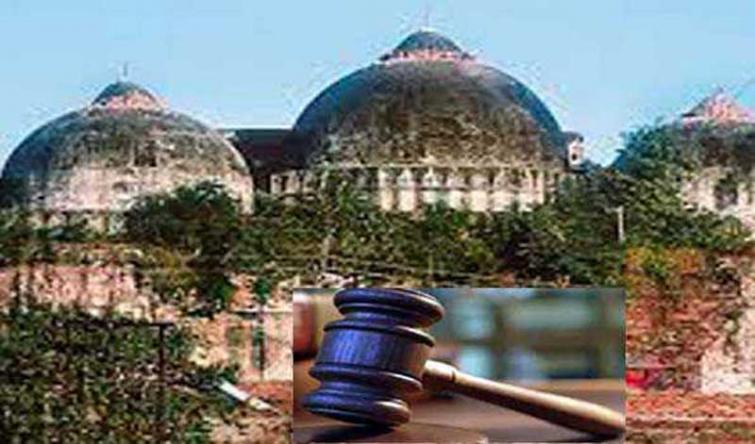
In 1992, the disputed Babri Masjid Ram Janmabhoomi structure was brought down by several right-wing volunteers who believe Lord Ram was born on that site.
On September 27 last year, the apex court had refused to re-visit its 1994 verdict which had stated mosque was not important for Muslims to offer prayers, paving way for the hearing of the Ayodhya case.
Support Our Journalism
We cannot do without you.. your contribution supports unbiased journalism
IBNS is not driven by any ism- not wokeism, not racism, not skewed secularism, not hyper right-wing or left liberal ideals, nor by any hardline religious beliefs or hyper nationalism. We want to serve you good old objective news, as they are. We do not judge or preach. We let people decide for themselves. We only try to present factual and well-sourced news.