 Terrorism
Delhi blast: Probe reveals doctors' module planned attacks on global coffee chain
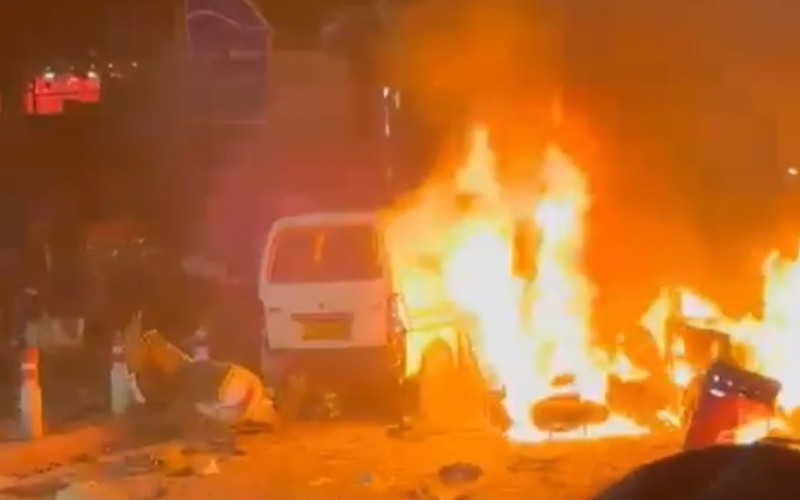
New Delhi/IBNS: Central agencies probing the car blast near Delhi’s Red Fort on November 10 last year have uncovered a far more expansive terror conspiracy than initially believed.
Investigators say the module behind the explosion had also planned coordinated attacks on outlets of a well-known global coffee chain in Delhi and other metropolitan cities, aiming to generate maximum political and psychological impact.
According to officials familiar with the investigation, the accused viewed the international brand as symbolically linked to Jewish influence, citing its leadership history during a phase of global expansion.
The proposed strikes were intended to project solidarity with narratives surrounding Israel’s military actions in Gaza and to internationalise the group’s messaging.
The revelations emerged during sustained interrogation of eight accused, including three medical professionals — Muzamil Ahmad Ganaie and Adeel Ahmed Rather from Jammu and Kashmir, and Shaheen Saeed from Uttar Pradesh.
Investigators were told that the terror module was divided over its choice of targets.
Sources said several members opposed attacks on civilian establishments, arguing that any action should be confined to security forces in Jammu and Kashmir.
However, Umar-un-Nabi, identified as the car-borne attacker who was killed in the blast, allegedly overruled these objections.
Officials believe he pushed for high-visibility targets outside the Valley to magnify national and international attention.
Investigators say Umar-un-Nabi and his associates believed that striking popular coffee chain outlets in major cities would attract global media attention and frame their actions within broader geopolitical conflicts.
The strategy, agencies assess, was designed to link local terror activity with global Islamist propaganda narratives.
Authorities are now examining whether the plan progressed beyond discussions, including whether reconnaissance was conducted or specific outlets were shortlisted for potential attacks.
Seven days after the blast, the National Investigation Agency arrested Jasir Wani, who was allegedly recruited for his technical skills.
According to sources, Wani was tasked with modifying drones into weaponised platforms and participated in discussions around executing Hamas-style attacks, potentially preceded by coordinated car bombings in multiple locations.
During interrogation, Wani reportedly revealed that Umar-un-Nabi initially attempted to radicalise him into carrying out a suicide attack.
While Wani resisted the idea, investigators say he later agreed to assist the module in an operational capacity.
Officials say the accused were linked to the banned terror outfit Ansar Ghazwat-ul-Hind and were influenced by propaganda attempting to merge local grievances with international conflicts.
Umar-un-Nabi, investigators believe, was particularly focused on executing a major strike around December 6, the anniversary of the Babri Masjid demolition, to heighten symbolic resonance.
Trail from Srinagar pamphlet to Delhi blast
The car explosion near the Red Fort came after nearly three weeks of surveillance by Jammu and Kashmir Police into what officials described as a “white-collar terror module.”
The probe was triggered by the recovery of a Jaish-e-Mohammed pamphlet in Srinagar on October 19, 2025, prompting intensified intelligence gathering.
The case was later handed over to the NIA. So far, nine individuals have been arrested, including three doctors.
During the initial investigation, police also recovered a video clip from Umar-un-Nabi’s phone in which he allegedly spoke about carrying out a suicide attack.
Central agencies continue to examine the extent of the conspiracy, including whether operational preparations had begun for attacks beyond the Red Fort blast.
Officials say further arrests and disclosures remain possible as the investigation progresses.
Support Our Journalism
We cannot do without you.. your contribution supports unbiased journalism
IBNS is not driven by any ism- not wokeism, not racism, not skewed secularism, not hyper right-wing or left liberal ideals, nor by any hardline religious beliefs or hyper nationalism. We want to serve you good old objective news, as they are. We do not judge or preach. We let people decide for themselves. We only try to present factual and well-sourced news.
Support objective journalism for a small contribution.