‘For Pakistan, it would be free’: BrahMos creator shares witty reply to Pak general’s query
New Delhi: Dr Apathukatha Sivathanu Pillai, widely recognised as the “father of BrahMos”, shared a sharp-witted anecdote about a Pakistani general’s inquiry into India’s prized supersonic cruise missile during a podcast conversation.
At an international arms expo in Dubai, Pillai recalled, a senior Pakistani army general approached him and asked whether India would consider selling the BrahMos missile to Pakistan. Without missing a beat, Pillai responded, “For Pakistan, it would be free of cost.”
The remark, laced with sarcasm, underscored the strategic importance and exclusivity of the BrahMos missile to India.
The exchange comes at a time when BrahMos continues to dominate headlines following its critical role in Operation Sindoor, India’s retaliatory strike after the Pahalgam terror attack that killed 25 Indian nationals and one Nepali citizen.
The mission saw India targeting multiple terror camps and air bases in Pakistan and Pakistan-occupied Kashmir (PoK) using precision munitions, with bases such as Rafiqui, Murid, Nur Khan, and Skardu among those hit.
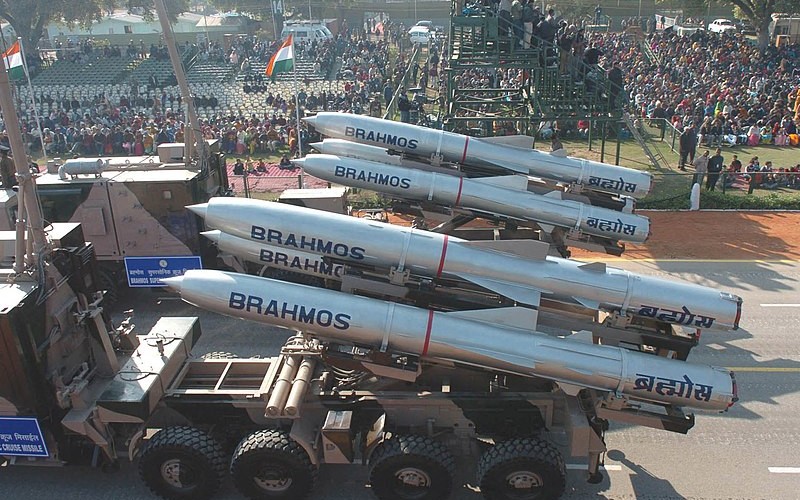
The BrahMos missile, a product of the joint collaboration between India’s DRDO and Russia’s NPO Mashinostroyeniya, remains one of India’s most advanced and operationally successful weapons systems.
Named after the Brahmaputra and Moskva rivers, the ramjet-powered cruise missile has a range of 290 km and can travel at speeds of Mach 2.8 to 3.
It is a two-stage missile — the first stage being a solid-fuel booster that propels it to supersonic speeds before separating, while the second stage is a liquid-fuel ramjet engine that maintains the missile’s high speed during cruise.
Its stealth features and advanced guidance systems make it a formidable force in India's strategic arsenal.
Although a majority of the missile’s components are still sourced from Russia, India has been steadily progressing towards indigenisation, with increasing involvement from the private sector to localise production.
Today, BrahMos stands as a symbol of India's defence innovation and strategic autonomy — a fact made all the more evident by Dr Pillai’s pointed remark that, for Pakistan, it wouldn’t just be off-limits — it would be offered "free," with the clear implication that it would arrive via other means.
Support Our Journalism
We cannot do without you.. your contribution supports unbiased journalism
IBNS is not driven by any ism- not wokeism, not racism, not skewed secularism, not hyper right-wing or left liberal ideals, nor by any hardline religious beliefs or hyper nationalism. We want to serve you good old objective news, as they are. We do not judge or preach. We let people decide for themselves. We only try to present factual and well-sourced news.
Support objective journalism for a small contribution.