India refused to be 'bullied' on trade deal, was ready to wait till 2029: Report
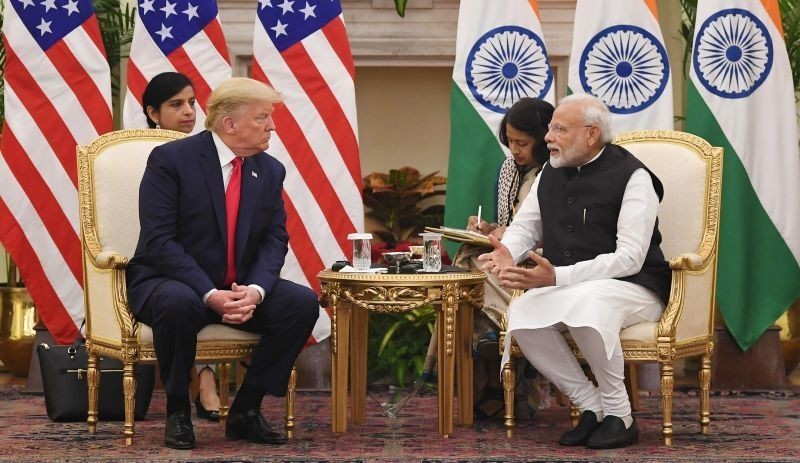
Even as US President Donald Trump and his administration project the India–US trade deal as a major win for Washington, a Bloomberg report has offered a contrasting account, suggesting New Delhi adopted a far tougher stance in negotiations.
According to the report, the Narendra Modi government conveyed to the Trump administration that India was prepared to wait out Trump’s presidential term rather than accept an unfavourable trade agreement.
The message was reportedly delivered during a meeting in early September 2025 between India’s National Security Adviser Ajit Doval and US Secretary of State Marco Rubio.
Bloomberg, citing officials in New Delhi familiar with the meeting, said Doval told Rubio that India would not be “bullied” by Trump or his aides and had previously dealt with hostile US administrations.
The officials spoke on condition of anonymity, describing the discussion as private. Both India’s Ministry of External Affairs and the US State Department declined to comment.
The meeting took place at a time when India–US relations were under strain, following repeated public criticism of the Narendra Modi-led government by Trump and senior members of his team, as well as the imposition of steep tariffs, reportedly as high as 50 per cent, on Indian exports, among the highest levied by the US.
The Bloomberg report has gained significance after Trump pre-emptively announced the finalisation of the trade deal on his social media platform, Truth Social, with his aides portraying it as a major victory for American interests, particularly in agriculture. Agriculture and dairy, however, have been sectors where India has drawn firm red lines.
According to the report, Doval also urged the US side to tone down public criticism of India to help reset bilateral ties. Shortly after the meeting, Trump’s rhetoric reportedly softened, and he later called Prime Minister Modi to wish him on his birthday in September.
Tensions had escalated earlier after Trump and officials such as Peter Navarro sharply criticised India, particularly following New Delhi’s rejection of Trump’s claims that he brokered a ceasefire between India and Pakistan during the four-day conflict in May 2025.
The fallout marked a sharp downturn in ties that had otherwise been steadily improving for over two decades.
On Sunday, Trump once again bypassed diplomatic protocol by announcing the completion of the trade deal on social media, claiming he had spoken to PM Modi.
While Modi confirmed the conversation, he made no mention of the trade agreement. Commerce and Industry Minister Piyush Goyal later said negotiations, which began in February 2025, had reached a “final form”.
The absence of official details has triggered criticism from the Opposition in India, with concerns that New Delhi may have been pressured on issues such as oil imports and agricultural access.
The Bloomberg report, however, suggests the Modi government was willing to delay the deal—potentially until the end of Trump’s term in 2029—rather than compromise on its core interests.
Support Our Journalism
We cannot do without you.. your contribution supports unbiased journalism
IBNS is not driven by any ism- not wokeism, not racism, not skewed secularism, not hyper right-wing or left liberal ideals, nor by any hardline religious beliefs or hyper nationalism. We want to serve you good old objective news, as they are. We do not judge or preach. We let people decide for themselves. We only try to present factual and well-sourced news.
Support objective journalism for a small contribution.