 UGC
UGC
Massive student uprising rocks Modi govt over new UGC rules on caste discrimination — what’s really in the controversial law?
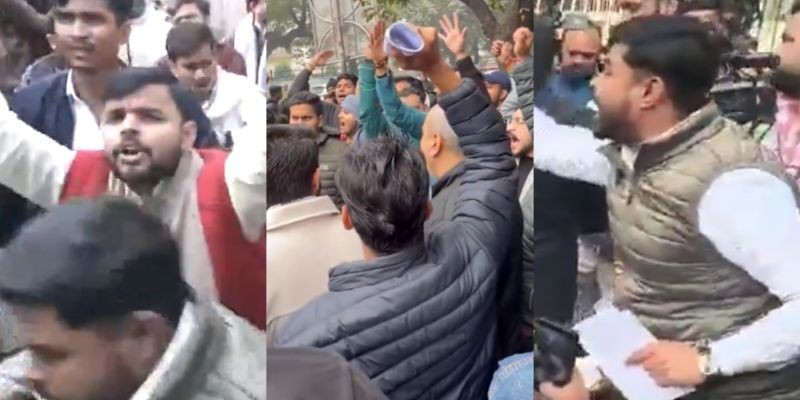
New Delhi/IBNS: Students across several universities—particularly in Uttar Pradesh—have launched widespread protests against the Modi government over the Centre’s newly announced and controversial UGC regulations aimed at addressing discrimination faced by students from reserved categories, media reports said.
Students are not going to take back the steps against the new discriminatory rules of UGC
— Shubham Sharma (@Shubham_fd) January 28, 2026
Thousands of students are gathering at the arts faculty pic.twitter.com/kgeb1qOr0A
In a rare show of large-scale dissent against Prime Minister Narendra Modi, protesters gathered outside the University Grants Commission (UGC) headquarters in New Delhi, demanding clarity and amendments to the regulations.
Demonstrations were also held across multiple cities in Rajasthan, including the state capital Jaipur.
In some visuals circulating on social media, protesters were seen burning effigies of the Prime Minister.
The agitators allege that provisions of the new law are “biased towards reserved castes” and could increase the risk of false cases against students from the general category.
Protesters claim the regulations may disadvantage general category students and be prone to misuse due to a lack of adequate safeguards.
A major point of contention is the absence of explicit representation of general category students in the proposed equity committees, which will be mandatory for all UGC-recognised higher education institutions.
The regulations are legally binding on central, state, private and deemed universities.
#WATCH | Lucknow, UP | Students protest in front of Lucknow University against the UGC policies. pic.twitter.com/ic8iJE8jIG
— ANI (@ANI) January 27, 2026
Key Provisions of the New UGC Law
1. Mandatory Anti-Discrimination Framework
The regulations seek to eliminate discrimination on higher education campuses based on caste, religion, gender, disability, race or place of birth.
2. Institutional Structures to Address Complaints
All colleges and universities are required to:
- Establish Equal Opportunity Centres (EOCs) to support students and address equity-related concerns
- Form Equity Committees to investigate complaints and recommend corrective action
- Provide 24×7 helplines and reporting mechanisms for discrimination-related grievances
3. Composition of Equity Bodies
Equity Committees and Centres must include representatives from:
- Scheduled Castes (SC)
- Scheduled Tribes (ST)
- Other Backward Classes (OBC)
- Persons with Disabilities (PwD)
- Women
The aim, according to the UGC, is to ensure diverse representation in grievance redressal.
4. Accountability and Monitoring
The UGC has been granted stronger enforcement powers compared to the earlier advisory framework, including monitoring mechanisms, mandatory reporting and potential penalties for non-compliance.
Why the Law Is Controversial
Supporters argue the framework strengthens safeguards against caste-based and other forms of discrimination on campuses.
However, critics—including students, teachers and some administrators—contend that:
- The rules may be biased against general or upper-caste students
- Complaint mechanisms do not clearly provide equal recourse for all groups
- Vague definitions could lead to misuse
- Institutions may face increased bureaucratic burden and potential constraints on academic freedom
Protests, resignations and political reactions have been reported from several states in response to the regulations.
Support Our Journalism
We cannot do without you.. your contribution supports unbiased journalism
IBNS is not driven by any ism- not wokeism, not racism, not skewed secularism, not hyper right-wing or left liberal ideals, nor by any hardline religious beliefs or hyper nationalism. We want to serve you good old objective news, as they are. We do not judge or preach. We let people decide for themselves. We only try to present factual and well-sourced news.
Support objective journalism for a small contribution.