 India-Nepal
Nepal bans Indian Mangoes: Local traders fear massive supply crisis ahead
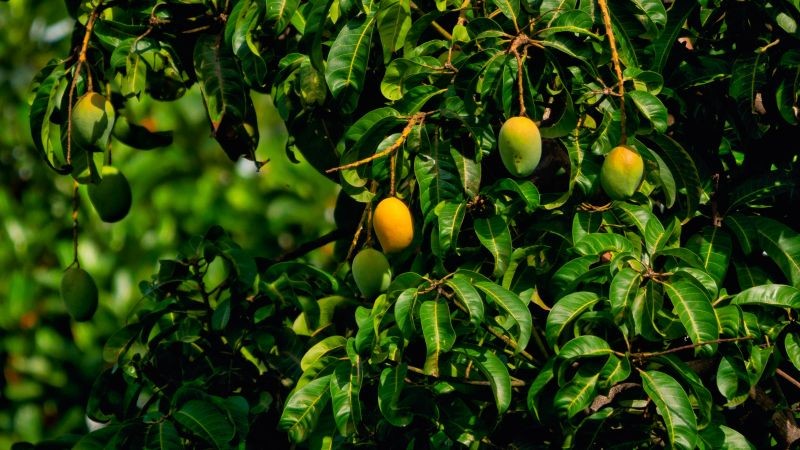
The Nepali government has banned the import of mangoes from India after border quarantine inspectors detected excessive levels of chemical pesticide residues in imported consignments. The move has left small traders concerned about supply disruptions and the sustainability of their businesses.
With mango demand currently at its seasonal peak across Nepal, traders say the restriction is already beginning to affect market supply. Local Nepali mango production has partially filled the gap, but it is limited to a short harvest window of around two months, making imports from India essential for maintaining year-round availability.
Bhuvaneshwar Purbe, general secretary of the Fruit and Vegetable Traders’ Association in Janakpurdham, told The Rising Nepal that mango demand typically surges during summer, and the suspension of Indian imports could trigger shortages in the market.
He noted that although more than 50 tonnes of mangoes arrive daily in Janakpurdham from districts such as Saptari, Siraha, Mahottari, Dhanusha and Sarlahi, domestic production alone is insufficient to meet overall demand.
Purbe suggested that instead of imposing a complete ban, the government should strengthen quarantine mechanisms and allow imports after proper quality testing.
“Our businesses operate throughout the year. If trade is restricted only to the Nepali harvest season and remains inactive for the rest of the year, it could seriously impact livelihoods,” he said.
Meanwhile, fruit sellers have warned that a prolonged import restriction could lead to sharp price increases for consumers and significant financial losses for traders, The Rising Nepal reported. Consumers have already expressed concern over rising prices of mangoes and bananas in the country.
According to reports, banana prices had previously reached as high as Rs. 300 per dozen and are still being sold at around Rs. 200 per dozen—levels many households consider expensive.
Manish Kumar Pal, spokesperson for the Ministry of Land Management, Agriculture and Cooperatives of Madhes Province, said the restriction could encourage greater consumption of local produce.
He noted that in earlier years, pesticide-contaminated mangoes had occasionally entered the market, but the current measures would help promote healthier and safer locally grown fruits.
Pal added that the government continues to prioritise agriculture through various programmes and subsidies, with plans to further strengthen domestic production in the coming years.
“The federal government’s decision will provide additional encouragement to local producers, while ensuring citizens have access to safer and healthier food,” he said.
Meanwhile, the development comes shortly after Japan temporarily suspended imports of Indian mangoes following quarantine officials’ concerns over pest-control compliance at treatment facilities inspected earlier this year, dealing a setback during the peak export season.
The restriction affects premium Indian mango varieties such as Alphonso, Kesar, Langra and Banganapalli, which are widely valued in the Japanese market.
The suspension also marks the first such restriction in nearly two decades. Japan had previously banned Indian mangoes over fruit fly concerns but lifted the curbs in 2006 after India upgraded its treatment and quarantine systems to meet strict phytosanitary standards.
Japanese authorities have now reiterated concerns regarding compliance with plant health and pest-control protocols, maintaining a strict zero-tolerance policy toward invasive pests such as fruit flies, which are considered a serious threat to domestic agriculture.
Support Our Journalism
We cannot do without you.. your contribution supports unbiased journalism
IBNS is not driven by any ism- not wokeism, not racism, not skewed secularism, not hyper right-wing or left liberal ideals, nor by any hardline religious beliefs or hyper nationalism. We want to serve you good old objective news, as they are. We do not judge or preach. We let people decide for themselves. We only try to present factual and well-sourced news.
Support objective journalism for a small contribution.