SC verdict on Triple Talaq is historic: Naqvi
He said the apex court verdict was a historic step towards ensuring social equality.
He tweeted: "Supreme Court judgement on #TripleTalaq is a historic step towards ensuring social equality and reform for Muslim women."
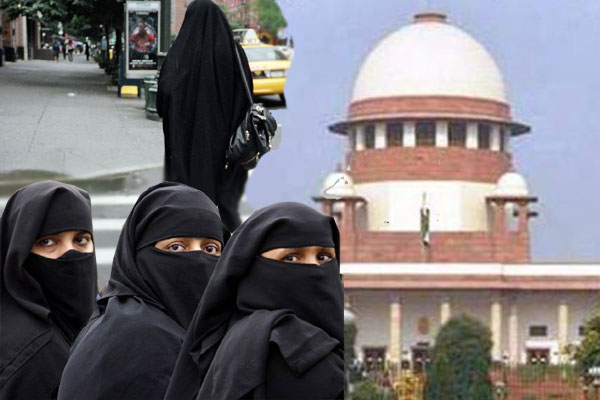
In a landmark victory for the Muslim women in India, who were fighting to scrap the practice of instant triple talaq, the Supreme Court of India on Tuesday said the practice is unconstitutional and illegal, and asked the country's government to legislate a law in Parliament.
In a 3:2 majority verdict, the apex court said Triple Talaq is unconstitutional and illegal since it is in violation of Article 14 of the Indian Constitution guaranteeing equality before the law.
It has thus been struck down in effect.
The five-judge bench comprises of Chief Justice Jagdish Singh Khehar, Justice Kurian Joseph, Justice Rohinton Fali Nariman, Justice Uday Umesh Lalit and Justice S Abdul Nazeer. The panel of five judges represent different faiths - Hinduism, Christianity, Islam, Sikhism and Zoroastrianism.
The Supreme Court also put the ball in the court of the Indian government to frame a law to ban it. The Chief Justice of India JS Khehar gave his judgement while other judges pronounced their verdicts too.
Support Our Journalism
We cannot do without you.. your contribution supports unbiased journalism
IBNS is not driven by any ism- not wokeism, not racism, not skewed secularism, not hyper right-wing or left liberal ideals, nor by any hardline religious beliefs or hyper nationalism. We want to serve you good old objective news, as they are. We do not judge or preach. We let people decide for themselves. We only try to present factual and well-sourced news.
Support objective journalism for a small contribution.