 BCI
BCI
‘Students must be free to express their views’: Bar Council chief apologises after NALSAR row
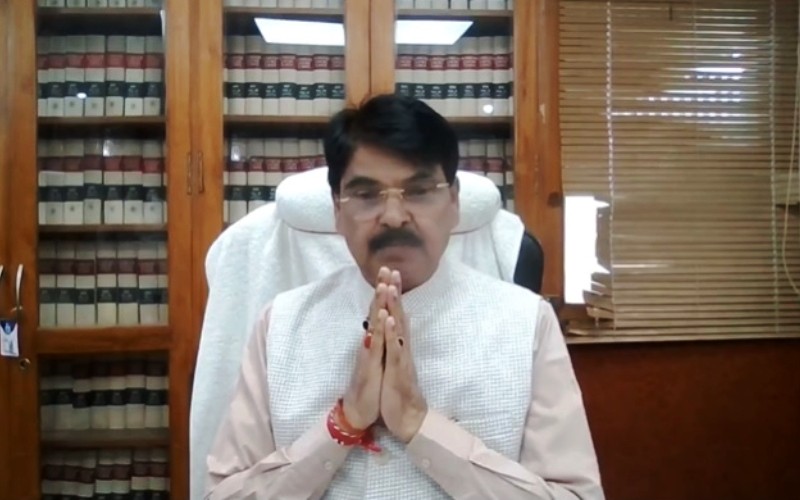
New Delhi/IBNS: Bar Council of India (BCI) chairman Manan Kumar Mishra has apologised to law students following the controversy over the BCI's decision to temporarily block the enrolment of the entire 2026 graduating batch of the National Academy of Legal Studies and Research (NALSAR).
In an Independence Day message addressed to “young friends”, Mishra acknowledged that the events surrounding the NALSAR controversy had caused “concern and anguish” among sections of the student community.
He said students must remain free to express their views and said he regretted any hurt caused by his words or communications during the dispute.
“If anything connected with the present controversy, any of my words, or letter, has hurt the feelings of our law students, I sincerely regret and apologise for the same,” Mishra wrote.
“There should be no hesitation in saying so. An expression of regret is not a matter of prestige or ego. It is simply an acknowledgement that the feelings and concerns of our students matter,” he added.
NALSAR campaign triggered BCI action
The controversy began after students at NALSAR in Hyderabad raised concerns over the proposed invitation to Chief Justice of India Surya Kant as the chief guest for the university's convocation.
More than 450 students reportedly signed a representation to the university authorities, expressing concerns over recent judicial developments, including the handling of alleged police excesses during a July 20 Parliament march.
The BCI responded on August 13 by directing State Bar Councils not to enrol students belonging to NALSAR's 2026 graduating batch as advocates.
The Council also sought information about those behind the student campaign and said it would take a final decision on August 19.
The move triggered criticism and a wider debate over whether the statutory professional body could collectively prevent an entire graduating batch from entering the legal profession because some students had participated in a campaign.
BCI withdraws enrolment freeze
Following the backlash, the BCI changed its position and allowed members of the NALSAR 2026 graduating batch to enrol.
The Council said the “vast majority” of students were innocent and subsequently dropped the proceedings altogether.
Mishra had earlier told India Today that “the matter stands closed” and that “everything has been withdrawn”.
“BCI stands for protecting the rights & interests of Law Students and Lawyers only,” he had said.
The controversy, however, brought renewed attention to the extent of the BCI's supervisory authority over State Bar Councils and the limits of its powers in matters concerning students who had not yet entered the profession.
SC calls BCI intervention ‘absolutely unnecessary’
The issue also reached the Supreme Court, where a bench headed by CJI Surya Kant criticised the BCI's intervention.
The court described the withdrawn order as “absolutely unnecessary” and observed that students had a right to protest.
It also directed that no punitive action be taken against NALSAR students or faculty at the instance of the BCI or State Bar Councils.
The Supreme Court questioned the BCI's role in what it characterised as a dialogue involving students and the Chief Justice of India.
The proceedings also brought into focus whether the BCI could use its supervisory authority over State Bar Councils to impose a blanket enrolment freeze on an entire graduating class before its members had been enrolled as advocates.
Advocates Act provisions come under scrutiny
The controversy also raised questions about the statutory framework governing enrolment and the BCI's supervisory powers.
Under the Advocates Act, 1961, admission to a State roll is primarily handled by State Bar Councils.
Section 6 empowers a State Bar Council to admit people as advocates on its roll and maintain that roll, while Section 25 provides for applications for enrolment to be made to the State Bar Council in whose jurisdiction an applicant proposes to practise.
The BCI has broader supervisory responsibilities.
Section 7 gives it general supervision and control over State Bar Councils and allows it to establish standards for legal education and recognise universities whose law degrees qualify students for enrolment.
Section 48B also permits the BCI to issue directions to State Bar Councils for the proper and efficient discharge of their functions.
The legislation separately provides mechanisms for action against people who are already enrolled as advocates.
Section 26(1), for instance, allows the BCI to remove a person's name from a roll in specified circumstances involving misrepresentation, fraud or undue influence, subject to an opportunity to be heard.
The Act also contains disciplinary provisions relating to professional or other misconduct by advocates.
The NALSAR graduates, however, had not yet been enrolled as advocates when the BCI issued its initial order.
That distinction became central to the debate surrounding the Council's decision.
'Students can make their own decisions'
In his latest letter, Mishra directly addressed the issue of student independence and said law students did not require others to decide matters on their behalf.
He described students at National Law Universities and other leading legal institutions as among India's “most informed and discerning young citizens”.
“They study the Constitution, the Rule of Law, fairness and the importance of hearing all sides before reaching a conclusion. They are fully capable of applying their own independent minds,” he wrote.
“They do not require anyone to decide for them. Nor should they be subjected to pressure or influence from any quarter.”
Mishra said National Law Universities occupy an important place in India's legal education system and that the decisions of their students can have significance beyond individual events.
He noted that students from such institutions would go on to become advocates, senior advocates, teachers, scholars and judges, with some eventually holding senior positions within India's legal and judicial system.
“That is why their decisions carry significance beyond a single event or controversy,” he wrote.
BCI chairman backs peaceful disagreement and protest
Mishra also explicitly referred to the importance of dissent in a constitutional democracy.
“Peaceful disagreement, questioning and protest are important features of a constitutional democracy. Students must always remain free to express their views,” he wrote.
At the same time, he said individuals should remain open to reconsidering their positions when further facts or clarifications become available.
“There is no inconsistency between expressing a genuine grievance and thereafter fairly considering a clarification,” Mishra said.
He also described the NALSAR convocation as a “very special occasion” for graduating students and their families, marking years of academic work.
Mishra said the decision to attend the event should ultimately remain with individual students.
“No student should be compelled to attend, and no student should feel compelled to abstain,” he wrote.
He urged students to consider the issue in its entirety and make their own decisions.
Appeal for dialogue over NALSAR controversy
Mishra called for the dispute to be addressed through dialogue and mutual respect, stressing the long-term relationship between students, universities, the judiciary and the legal profession.
“The relationship between the Judiciary, the Bar, Universities and law students is much deeper and more enduring than any temporary controversy,” he wrote.
“Differences may arise, and strong views may be expressed, but such differences should ultimately be capable of resolution through dialogue, clarification and mutual respect.”
He said the BCI regarded law students as the future of the legal profession and that their “dignity, independence of thought and legitimate concerns must always be respected”.
Mishra also urged that the controversy should not acquire a “political or extraneous colour through outside influence”.
“Our law students are mature and discerning enough to examine the facts, consider the clarification offered, and take their own independent decision,” he said.
“Let the students examine the matter themselves. Let every institution respect their independence of thought.”
He called for sufficient space for dialogue and said institutions should move forward without bitterness where clarifications had been offered.
Calls for BCI chairman's resignation
The original BCI decision also led to calls for Mishra's resignation.
Saurav Das, co-convenor of the Cockroach Janata Party (CJP), called for Mishra to step down following the Supreme Court's criticism of the Council's intervention.
“Moral responsibility commands that Manan Kumar Mishra resign. Cockroaches both inside and outside courts should ensure this happens,” Das said in a post on X.
AIMIM MP Asaduddin Owaisi also questioned the BCI's authority to take action against the NALSAR graduating batch.
“The BCI Chairman first directed State Bar Councils not to enrol NALSAR's 2026 graduates as advocates. The BCI has now withdrawn that order and instead ordered an inquiry into who organised the student campaign over the CJI's participation in the convocation. What power does the BCI or its chairman have to do this?” Owaisi said.
NALSAR row follows controversy over CJI remarks
The dispute at NALSAR also unfolded against the backdrop of a separate political campaign surrounding remarks attributed to CJI Surya Kant in which unemployed young people were referred to as “cockroaches”.
The remarks led to the formation of the Cockroach Janata Party and to a broader campaign addressing issues affecting young people.
In the NALSAR controversy, the Supreme Court has since backed the students' right to dissent and protest, while the BCI has withdrawn its action against the 2026 graduating batch.
Mishra's latest Independence Day message now stresses independent thought, constitutional values, dialogue and mutual respect.
“Our students are the future leaders of the Bar, the Bench and legal academia. Their greatest strength will always be their ability to think independently, listen to differing viewpoints and reach conclusions guided by reason, fairness and the Constitution,” he wrote.
He concluded his message by highlighting “independent thought, mutual respect and constitutional responsibility” and extended Independence Day greetings to law students, teachers, members of the Bar and other citizens.
Support Our Journalism
We cannot do without you.. your contribution supports unbiased journalism
IBNS is not driven by any ism- not wokeism, not racism, not skewed secularism, not hyper right-wing or left liberal ideals, nor by any hardline religious beliefs or hyper nationalism. We want to serve you good old objective news, as they are. We do not judge or preach. We let people decide for themselves. We only try to present factual and well-sourced news.
Support objective journalism for a small contribution.