TMC accuses Election Commission of covering up alleged voter ID fraud
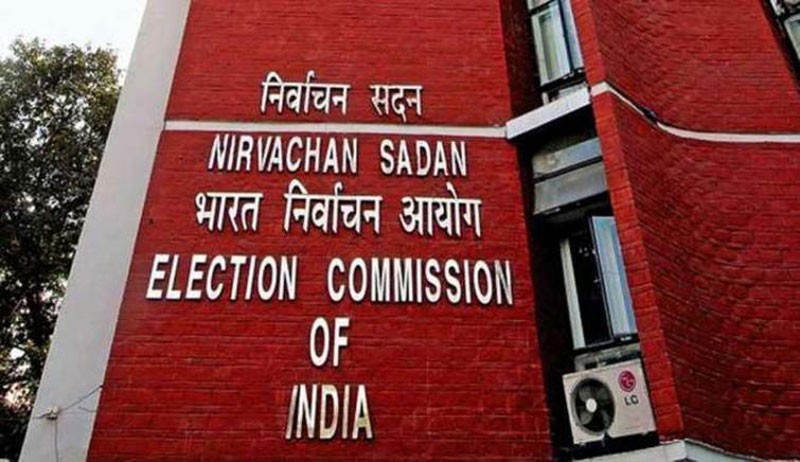
New Delhi: Trinamool Congress (TMC) leader Saket Gokhale on Tuesday accused the Election Commission of India (ECI) of attempting to “cover up” alleged voter list fraud rather than acknowledging it, media reports said.
The Rajya Sabha MP claimed the poll body was trying to dismiss concerns over duplicate voter IDs instead of admitting to what he called a “blunder”, reported The Times of India.
Citing ECI’s handbook for electoral registration officers, Gokhale alleged that the commission’s clarification on the issue was “false” and contradicted its own rules and guidelines.
In a detailed rebuttal, the TMC leader raised concerns over the duplication of Electors Photo Identity Card (EPIC) numbers, a unique identifier assigned to every registered voter in India.
He questioned the ECI’s assertion that multiple voters had been assigned the same EPIC number due to some states using an identical alphanumeric series.
Referring to the ECI’s handbook, Gokhale pointed out that the Functional Unique Serial Number (FUSN) differs for each assembly constituency.
Therefore, he argued, it was impossible for voters in different constituencies—even within the same state—to have EPIC numbers with the same first three letters.
“EPIC numbers are an alphanumeric sequence of three letters and seven digits. The ECI handbook CLEARLY states that the three-letter FUSN is unique for every assembly constituency. So how is it that voters in West Bengal have been assigned the same EPIC numbers as individuals in Haryana, Gujarat, and other states?” he wrote in a post on X.
New update on ECI Voter ID FRAUD 👇
— Saket Gokhale MP (@SaketGokhale) March 4, 2025
Yesterday, @AITCOfficial had given ECI 24 hours to admit and accept their blunder on the duplicate voter ID fraud issue.
Clearly the ECI, which has been exposed, wants to brazen it out.
The “clarification” given by ECI (on a Sunday) in… pic.twitter.com/djnfWodk83
Countering the ECI’s claim that voters with duplicate EPIC numbers can only vote in their registered constituency, Gokhale warned that discrepancies in photo electoral rolls could still prevent them from voting.
“In photo electoral rolls, an elector’s EPIC number links them to their photo. If a voter in Bengal is assigned the same EPIC number as someone in another state, their photo in the electoral roll may not match, leading to refusal of voting rights,” he argued.
Addressing the ECI’s stance that duplicated EPIC numbers do not affect voting, Gokhale insisted that the software used for generating voter IDs tracks all issued and unissued numbers to prevent duplication.
Since EPIC numbers are permanently linked to voter details and photographs, he asserted that it was “impossible” for errors to result in the same number being assigned to multiple voters across states.
Calling the issue a "conspiracy to suppress voters likely to vote against the BJP,” he demanded the ECI disclose the total number of active EPIC cards and how many had duplicate numbers.
The TMC had earlier accused the Election Commission of electoral “fraud” and alleged large-scale duplication of voter card numbers.
On Monday, party MPs Derek O’Brien, Kirti Azad, and Sagarika Ghose gave the ECI a 24-hour ultimatum to accept the error and rectify the voter rolls within 100 days.
They warned that failure to do so would prompt them to release further evidence exposing what they described as a “scam.”
The controversy first came to light on February 27, when West Bengal Chief Minister Mamata Banerjee raised concerns over the issue.
Support Our Journalism
We cannot do without you.. your contribution supports unbiased journalism
IBNS is not driven by any ism- not wokeism, not racism, not skewed secularism, not hyper right-wing or left liberal ideals, nor by any hardline religious beliefs or hyper nationalism. We want to serve you good old objective news, as they are. We do not judge or preach. We let people decide for themselves. We only try to present factual and well-sourced news.
Support objective journalism for a small contribution.