 Battle of Galwan
Salman Khan's Battle of Galwan trailer sparks massive outrage in China – Here’s why?
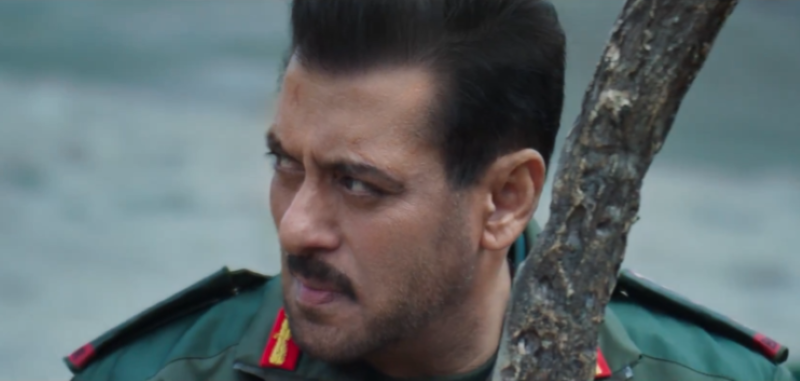
The trailer of Bollywood superstar Salman Khan's upcoming movie Battle of Galwan has sparked strong reactions in China, with the neighbouring country's experts claiming it attempts to rewrite history.
A Chinese expert told Global Times that while Bollywood films may offer entertainment-driven and emotionally charged portrayals, no amount of cinematic exaggeration can alter history or undermine the PLA's determination to defend China's sovereign territory.
The movie is based on the 2020 Galwan clash, an incident that significantly strained ties between the two neighbors. In the war film, Salman Khan—known for his numerous Bollywood hits—portrays Colonel Bikkumalla Santosh Babu, the commanding officer of the 16 Bihar Regiment, who lost his life while confronting intruding People's Liberation Army (PLA) troops.
Song Zhongping, a Chinese military expert, told the Global Times on Monday that India’s use of films, particularly Bollywood productions, to evoke nationalistic sentiment is unsurprising, reflecting a deeply rooted cultural and political tradition.
He added that, regardless of cinematic dramatization, the core facts of the Galwan Valley incident remain unchanged: India crossed the border first, and the PLA defended Chinese territory in accordance with the law.
"In extreme highland conditions, Chinese soldiers consistently uphold their duties and confront challenges, giving the public confidence. The incident resonates strongly in Chinese society, highlighting the recognition of national will and military spirit," Song said.
"No matter how 'over-the-top' a drama may be, a nation's sacred territory will never be affected by a film," he added.
Lan Jianxue, director of the Department of Asia-Pacific Studies at the China Institute of International Studies, told the Global Times that the film’s theme and timing are inappropriate, as it presents a one-sided Indian narrative and could stoke antagonistic sentiment at a time when China-India relations have only recently shown signs of easing.
Directed by Apoorva Lakhia, Battle of Galwan is slated for release on April 17, 2026.
Indian filmmaker Ashoke Pandit criticized the Chinese response to the trailer.
Speaking to NDTV, Pandit said, "The reaction was obvious. When an Indian filmmaker makes a film, they naturally highlight the activities of our adversary. Our nation is strong, and our security forces are brave. The reaction from the Global Times reflects insecurity."
Support Our Journalism
We cannot do without you.. your contribution supports unbiased journalism
IBNS is not driven by any ism- not wokeism, not racism, not skewed secularism, not hyper right-wing or left liberal ideals, nor by any hardline religious beliefs or hyper nationalism. We want to serve you good old objective news, as they are. We do not judge or preach. We let people decide for themselves. We only try to present factual and well-sourced news.
Support objective journalism for a small contribution.