


A justice system that fails children ultimately fails society: UN rights expert
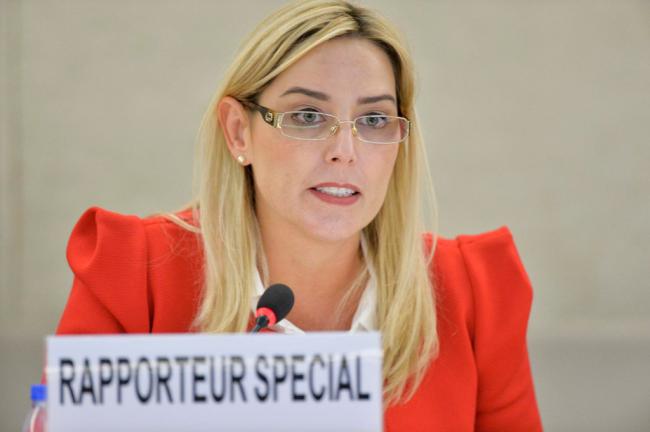
The UN Special Rapporteur on the independence of judges and lawyers Gabriela Knaul made public her findings during the presentation of her latest report to the UN Human Rights Council.
“Every day throughout the world, countless children suffer adverse consequences at the hands of justice systems that disregard or even directly violate their fundamental human rights,” she noted.
She asked, “Not only do children face the same obstacles as adults to access justice, but they also encounter challenges and barriers linked to their status of minors.”
“Children still count among the most vulnerable to human rights violations and other types of abuse,” Knaul said, calling on States to develop justice systems adapted to their needs and rights.
He asked, “Justice must be child-sensitive; it needs to respect, protect and fulfil the rights of children and take into account their best interests.”
Despite the quasi-universal ratification of the Convention on the Rights of the Child, the report notes that children still count among the most vulnerable to human rights violations and other types of abuse
Knaul said, “It is unacceptable that children who come into contact with the justice system are often victimized or re-victimized.”
“For this reason, the importance of child-sensitive justice – justice that respects, protects and fulfils the rights of children – cannot be overemphasized,” the expert said in her report.
She added, “An administration of justice that fails children ultimately also fails society.”
According to the report, “between 1 March 2014 and 28 February 2015 inclusive, she sent a total of 117 communications alleging violations of human rights in the context of her mandate to 54 Member States. Of these communications, 86 were urgent appeals and the remaining 31 were letters of allegation.”
“Every day throughout the world, countless children suffer adverse consequences at the hands of justice systems that disregard or even directly violate their fundamental human rights,” Knaul said.
She added, “Not only do children face the same obstacles as adults to access justice, but they also encounter challenges and barriers linked to their status of minors.”
Knaul called on states to develop justice systems adapted to their needs and rights because “justice must be child-sensitive; it needs to respect, protect and fulfil the rights of children and take into account their best interests.”
Among her 19 recommendations, the Special Rapporteur called for adoption of alternative mechanisms to complement or replace judicial proceedings, in order to mitigate or avoid the trauma that can result when children go through the established process.
“Judges, prosecutors and lawyers can influence the future course of children’s lives,” the expert said.
He added, “To discharge such a great responsibility, it is essential that they receive specialized education and training in international human rights and in particular children’s rights.”
Knaul took up her functions as UN Special Rapporteur on the independence of judges and lawyers on 1 August 2009.
Experts like Knaul work on a voluntary basis; they are not UN staff and do not receive a salary for their work. They are independent from any government or organization and serve in their individual capacity.
Photo: UN Photo/Jean-Marc Ferré
Support Our Journalism
We cannot do without you.. your contribution supports unbiased journalism
IBNS is not driven by any ism- not wokeism, not racism, not skewed secularism, not hyper right-wing or left liberal ideals, nor by any hardline religious beliefs or hyper nationalism. We want to serve you good old objective news, as they are. We do not judge or preach. We let people decide for themselves. We only try to present factual and well-sourced news.
Support objective journalism for a small contribution.


