


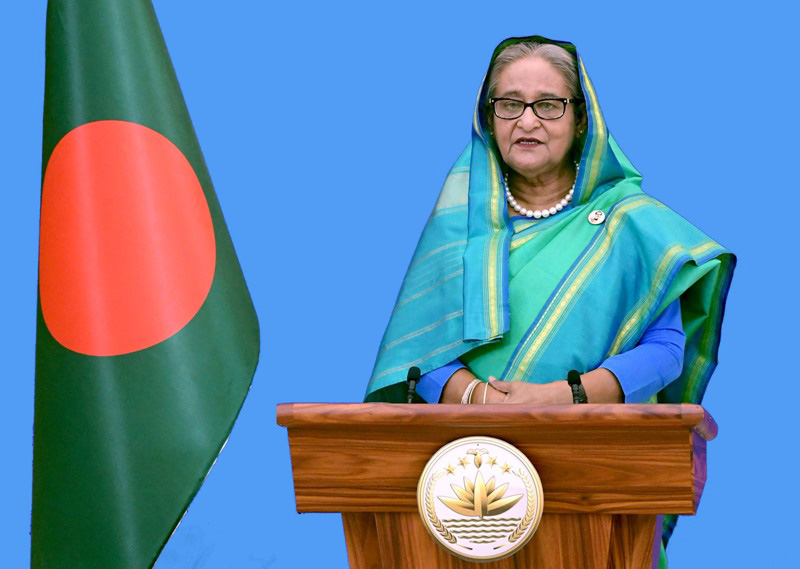
 Sheikh Hasina
Bangladesh’s PM Hasina recalls six-point charter released by Sheikh Mujibur Rahman
Bangladesh Prime Minister Shiekh Hasina, recalling the six-point charter released by the country’s founding father, Sheikh Mujibur Rahman, in 1966, said that the charter was meant for independence. In 1966, the charter sought greater autonomy for erstwhile East Pakistan.
“The Six-Point Charter actually consisted of one point that was independence. At least we, the family members, knew it. He (Mujirbur Rahman) always told us that Six Points meant one point - independence. Now, we are an independent nation,” she was quoted as saying by BDNews24 at an event organized to mark the Six-Point charter.
She also claimed that it was because of the Six-Point movement that led to the 1970 landmark general elections in Pakistan (which then also included Bangladesh then known as East Pakistan).
The Awami League, the party headed by Mujibur Rahman, secured an absolute majority in the 1970 elections. However, the country’s military ruler at the time refused to transfer power to Mujibur Rahman, leading to a bloody independence movement that led to the creation of independent Bangladesh in 1971.
Hasina claimed that Pakistan rulers at the time thought that the six-point movement was a separatist movement. “But Bangabandhu actually talked about the rights of the people,” she added.
“The Six Points reflected the thoughts he (Bangabandhu) nurtured to change the fate of Bengalis since the creation of Pakistan. And he got the opportunity (to forge the Six Points) when the 1965 India-Pakistan war laid bare the insecurity of the people of this land,” Hasina recalled.
Support Our Journalism
We cannot do without you.. your contribution supports unbiased journalism
IBNS is not driven by any ism- not wokeism, not racism, not skewed secularism, not hyper right-wing or left liberal ideals, nor by any hardline religious beliefs or hyper nationalism. We want to serve you good old objective news, as they are. We do not judge or preach. We let people decide for themselves. We only try to present factual and well-sourced news.
Support objective journalism for a small contribution.


