


Canada: QEW HOT lanes pilot project saves driving time
Other congestion-reducing initiatives, including GO Regional Express Rail are being complemented by HOT lanes and are expected to increase GO train trips by 50 percent over the next five years with more stops serving more communities.
GO Transit, a division of Metrolinx, is the regional public transit service for the Greater Toronto and Hamilton Area, with routes extending to communities across the Greater Golden Horseshoe.
Ontario Ministry of Transportation has launched, continued the release, HOT lanes on the QEW (Queen Elizabeth Way) and encourage carpooling to test a new way to improve traffic flow.
Greater Toronto Hamilton Area highway expansion projects beginning with Highways 410 and 427 -- currently under construction -- are also being included in Ontario’s HOT lanes projects.
The cost of permits is $180, renewable for a maximum of two terms to allow for a reasonable allotment of permits during the pilot project.
Permit applications are accepted during February, May, August and November and can be submitted at Ontario.ca/HOTLanes.
Vehicles with two or more occupants, the release said, or green licence plates, can travel in the HOT lanes -- on 16.5 kilometres of the QEW in both directions from Trafalgar Rd. in Oakville to Guelph Line in Burlington -- for free, while drivers of single-occupant vehicles can apply to purchase a permit.
Green licence plates vehicles -- even with only one person in the car -- have access to High Occupancy Vehicle (HOV) lanes and no-cost access to HOT lanes on 400-series highways and the QEW.
This pilot project, which will last from two to four years, will explore innovative technology to support HOTlanes -- including tolling, compliance and performance – and enable us to plan for a more efficient highway network in Ontario.
“Research has shown that our QEW HOT lanes are working effectively and the pilot continues to save drivers’ time in their daily commutes. The results of the pilot are helping us build a more comprehensive network of High Occupancy Vehicle and HOT lanes across the region, when and where it makes sense to do so. This is part of our government’s commitment to keep Ontario moving in an efficient manner,” said Steven Del Duca, Ontario Minister of Transportation.
An applicant can avail up to 1,000 HOT permits for each three-month term.
An applicant who is unsuccessful in the draw can enter a future draw during the HOT lanes pilot project, which is expected to last two to four years.
Commuters using the general purpose lanes, suggests an analysis, could save 10 minutes on average during peak times by using the HOT lanes.
Permit holders, after having renewed twice, and wishing to renew will be required re-enter the application draw.
(Reporting by Asha Bajaj)
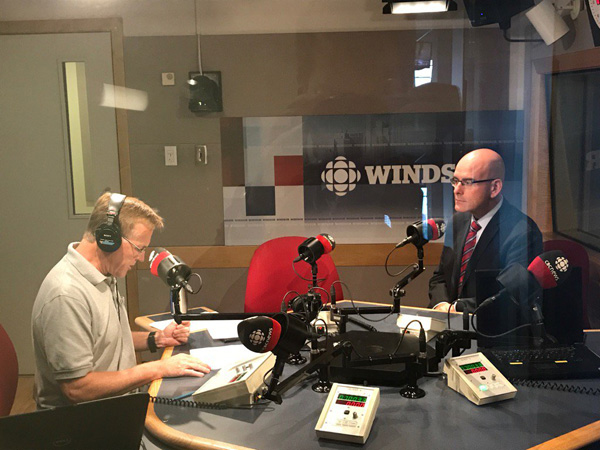
Image: Steven Del Duca/Twitter
Support Our Journalism
We cannot do without you.. your contribution supports unbiased journalism
IBNS is not driven by any ism- not wokeism, not racism, not skewed secularism, not hyper right-wing or left liberal ideals, nor by any hardline religious beliefs or hyper nationalism. We want to serve you good old objective news, as they are. We do not judge or preach. We let people decide for themselves. We only try to present factual and well-sourced news.
Support objective journalism for a small contribution.


