


 Arctic Defence
Canada unveils $35B Arctic plan to boost defence, infrastructure and resource development
Ottawa: Canada has announced a sweeping $35 billion plan to strengthen defence, infrastructure and economic development across its Arctic and northern regions, as the government warns that climate change and growing geopolitical competition are reshaping the strategic landscape of the North.
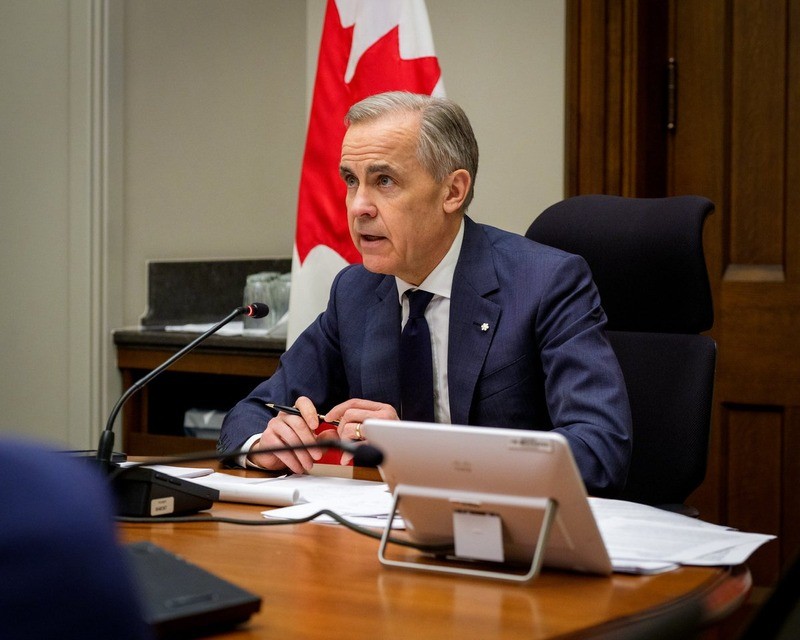
Prime Minister Mark Carney in a statement said the initiative includes over $35 billion in federal investments aimed at defending Arctic sovereignty, improving infrastructure and unlocking the region’s economic potential.
"After decades of limited and piecemeal investments in the North, Canada’s new government is acting with a scale of ambition worthy of this vast region and its peoples," Carney said.
"We are securing every corner of this terrain, unlocking its vast resources, and delivering the strong, connected network of communities that Northerners deserve," Carney stated further.
The plan comes as Arctic regions warm nearly three times faster than the global average, opening new shipping routes and increasing competition among major powers for access to resources and strategic territory.
Major defence investments
A large portion of the funding will strengthen Canada’s military footprint in the North.
The government said it will invest $32 billion to expand and modernise key northern military bases, including forward operating locations in Yellowknife, Inuvik and Iqaluit, as well as facilities at Goose Bay in Labrador.
These upgrades will include runway expansions, new hangars, ammunition and fuel storage facilities, and improved infrastructure to support Canadian Armed Forces deployments.
Canada will also build two new Northern Operational Support Hubs in Whitehorse and Resolute and two additional support nodes in Cambridge Bay and Rankin Inlet, backed by an investment of $2.67 billion.
Defence Minister David McGuinty said the investments will help Canada respond faster to emerging security threats in the Arctic.
“These investments will continue to build the defence team’s presence and responsiveness across the Arctic and the North and reinforce our ability to assert Canadian sovereignty,” McGuinty said.
Infrastructure and economic projects
Beyond defence, Ottawa is also advancing a series of major infrastructure projects intended to transform transportation and resource development in the region.
Among them is the Mackenzie Valley Highway, an approximately 800-kilometre route linking Yellowknife to Inuvik, which would provide year-round road access to remote and Indigenous communities.
The government is also moving forward with the Greys Bay Road and Port project, which would create Canada’s first overland connection to a deep-water port on the Arctic Ocean. The project includes a 230-kilometre all-season road, port infrastructure and an airstrip designed for both civilian and military use.
In addition, the proposed Arctic Economic and Security Corridor, a roughly 400-kilometre road through the mineral-rich Slave Geological Province, is expected to connect major copper, gold and zinc deposits to national transportation networks and global markets.
Energy Minister Tim Hodgson said the investments mark a turning point for Canada’s northern economy.
“We are at a turning point where national security, energy sovereignty and economic independence meet,” Hodgson said. “Canada’s Arctic and the vast deposits of critical resources it holds are vital to our future.”
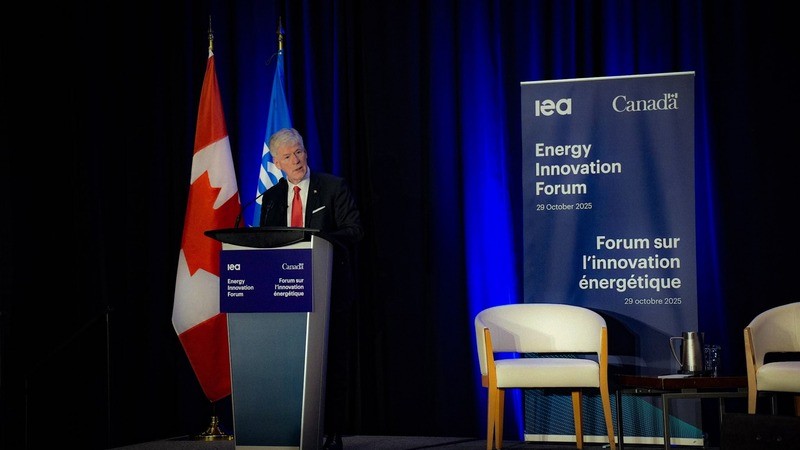 Tim Hodgson at the 2025 Energy Innovation Forum in Toronto, Canada Photo: Tim Hodgson/X
Northern development and communities
The plan also includes investments aimed at improving transportation and living conditions in northern communities.
Ottawa said $294 million will be invested in Arctic airports, including upgrades to facilities in Rankin Inlet and Inuvik to allow larger aircraft to operate year-round, improving travel for both residents and military operations.
The government said the broader initiative is intended to support approximately 140,000 residents across Canada’s North, including Indigenous communities, by improving infrastructure, connectivity and economic opportunities.
Officials say the investments are part of a broader strategy to reduce Canada’s reliance on allies for Arctic security while strengthening the country’s ability to defend its territory and manage its resources independently.
The government said it will continue working with territorial governments and Indigenous partners as the projects move forward, describing the initiative as a long-term effort to reshape Canada’s northern strategy in an increasingly contested Arctic region.
Support Our Journalism
We cannot do without you.. your contribution supports unbiased journalism
IBNS is not driven by any ism- not wokeism, not racism, not skewed secularism, not hyper right-wing or left liberal ideals, nor by any hardline religious beliefs or hyper nationalism. We want to serve you good old objective news, as they are. We do not judge or preach. We let people decide for themselves. We only try to present factual and well-sourced news.
Support objective journalism for a small contribution.


