


 Canada
‘Failed for 40 years’: Indian envoy blasts Canada over terror networks operating on its soil
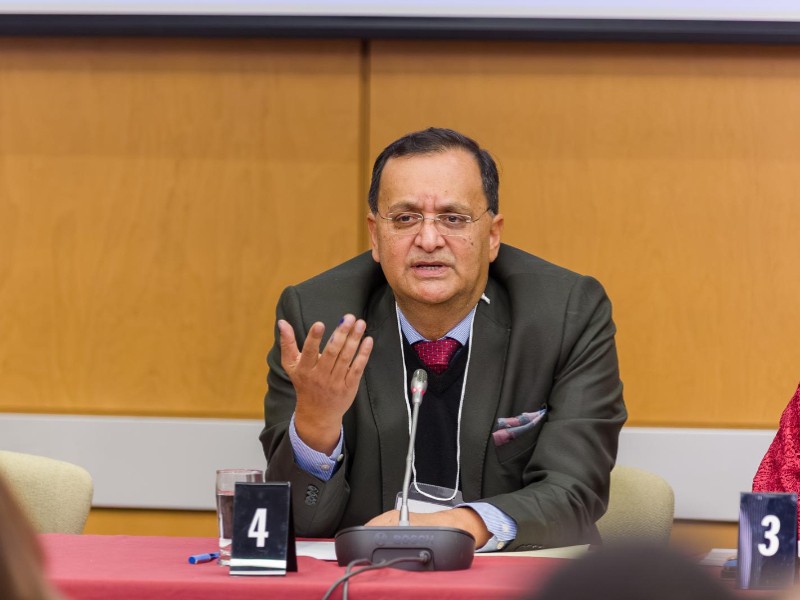
Ottawa/IBNS: In a blunt and at times confrontational interview on Canada’s public broadcaster CBC, India’s High Commissioner to Canada, Dinesh Patnaik, accused Ottawa of failing for over four decades to act against extremist groups operating from its territory.
He said the prolonged inaction had created a permissive environment for violence and radicalisation directed at India.
The remarks come amid tentative efforts by both sides to repair strained bilateral relations, including a trade mission to India led by British Columbia Premier David Eby and signals from Ottawa about resetting diplomatic ties.
However, the discussion quickly shifted from trade to the most sensitive issue dividing the two countries: allegations surrounding the killing of Khalistani extremist Hardeep Singh Nijjar.
‘Where is the evidence?’
Patnaik forcefully challenged the CBC anchor’s repeated references to what was described as “credible intelligence” linking Indian agents to Nijjar’s assassination.
“Where is the evidence?” the envoy asked, dismissing the claims as unsubstantiated. “It’s very easy to make allegations. Accusations are easy.”
He stressed that no concrete proof has been presented to support accusations against the Indian state, adding that claims without evidence cannot be treated as fact.
Four decades of inaction
Turning the spotlight back on Canada, Patnaik accused the country of consistently failing to dismantle extremist networks.
“We have been talking about terrorism in Canada for 40 years. What has anybody done about it? Not a single person has been convicted,” he said.
He specifically referenced the 1985 Air India bombing that killed 329 people, most of them Canadian citizens, calling it a stark example of investigative and judicial failure.
“Even today, that investigation has not delivered justice,” he added.
Allegations vs accountability
The Indian diplomat accused Canada of applying double standards, saying Ottawa demands proof when India flags extremists operating on Canadian soil, yet expects New Delhi to respond to allegations without evidence.
“When I accuse you and you say evidence is not enough, I agree. When you accuse me and I say evidence is not enough, you should accept it the same way,” he said.
‘India does not do this’
Patnaik categorically denied any involvement of the Indian government in targeted killings abroad.
“The Government of India does not do such actions, never,” he said, adding that if any individual official is proven guilty through evidence, India will take action on its own. “We don’t need others to do it for us.”
'Referendums not the issue, terror links are'
He also rejected the claim that India objects to separatist referendums.
“We never said holding a referendum is a crime,” Patnaik clarified. “Our concern is about people who are wanted in India or involved in terrorist activities abroad.”
Case against individuals, not India
At one point, the envoy reminded viewers that the ongoing court case in Surrey involves four individuals, not the Indian state.
“Where is the case against the state?” he asked, challenging the narrative that India itself is under legal scrutiny.
Diplomatic reset, but with conditions
The interview coincides with Canadian Prime Minister Mark Carney expressing interest in rebuilding ties with India, including restarting talks on a comprehensive economic partnership agreement.
Patnaik acknowledged that both sides are “catching up” after a damaging pause in relations.
However, he warned that any meaningful reset depends on a fundamental shift in Canada’s approach to security.
“For 40 years, when we give information about terrorists active in Canada, we are told there is not enough evidence to act,” he said.
India’s bottom line
Summing up New Delhi’s stance, Patnaik said, “The law says innocent until proven guilty. Let the law take its course.”
Until then, he argued, Canada’s record reflects not vigilance but a prolonged and costly failure to confront extremism on its own soil.
Support Our Journalism
We cannot do without you.. your contribution supports unbiased journalism
IBNS is not driven by any ism- not wokeism, not racism, not skewed secularism, not hyper right-wing or left liberal ideals, nor by any hardline religious beliefs or hyper nationalism. We want to serve you good old objective news, as they are. We do not judge or preach. We let people decide for themselves. We only try to present factual and well-sourced news.
Support objective journalism for a small contribution.


