

Help African farmers cope with climate change threats, UN food agency urges
New York, Aug 7 (IBNS): African farmers need help to cope with the threats of climate change, with national policies that protect them and make them resilient, the UN Food and Agriculture Organization, FAO, has declared, following a major conference on food security in the continent.
In a statement released on Tuesday, at the conclusion of the high-level Africa Food Security Leadership Dialogue, in the Rwandan capital, Kigali, the FAO stated that building resilience is one of the agency’s priorities in Africa, and is key to meeting the challenge of feeding over two billion by 2050.
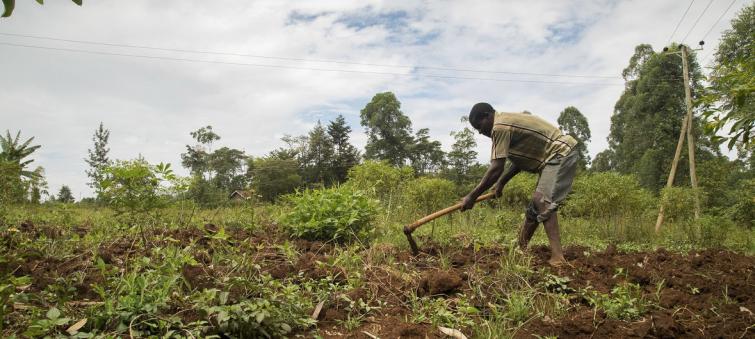
Small-scale food producers and their families, says the UN agency, are particularly vulnerable to the negative impacts of climate change, but they have always been innovators: "What they need are policies that protect them and increase their resilience to climate change”, Helen Semedo, FAO's Deputy Director-General, told the conference. “They need access to information, technology, and investment, and they should be brought to the conversation on innovation".
According to the latest FAO data, hunger is on the rise in almost all parts of Africa, and the continent has the highest prevalence of undernourishment in the world, at almost 20 percent.
The situation, which is attributed mainly to conflict and climate change, is particularly acute in Eastern nations, where almost one-third of the population struggles to find enough to eat.
On Monday, participants – who heard that adaptation to climate risks is possible if there is immediate and bold action taken to build resilience – endorsed a commitment to do more to help African countries to improve their food security.
The aim of the Leadership Dialogue is to engage governments and key development partners, and bring about unified action for Africa's agriculture and food systems in response to climate change.
The two-day event was hosted by the Government of Rwanda, in partnership with the FAO, the African Union Commission, the African Development Bank, the International Fund for Agricultural Development and the World Bank.
World Bank/Peter Kapuscinski
Support Our Journalism
We cannot do without you.. your contribution supports unbiased journalism
IBNS is not driven by any ism- not wokeism, not racism, not skewed secularism, not hyper right-wing or left liberal ideals, nor by any hardline religious beliefs or hyper nationalism. We want to serve you good old objective news, as they are. We do not judge or preach. We let people decide for themselves. We only try to present factual and well-sourced news.
Support objective journalism for a small contribution.