


Increasing cases of enforced disappearances ‘just the tip of the iceberg,’ UN experts group warns
“We are seriously concerned that the number of enforced disappearances is increasingly rising with the false and pernicious belief that they are a useful tool to preserve national security and combat terrorism,” the human rights experts told the UN Human Rights Council yesterday, according to a news release issued by the Office of the UN High Commissioner for Human Rights (OHCHR).
“Last year alone, we dealt with 483 urgent actions out of 766 newly reported cases of disappearance in 37 States; more than three times higher than those reflected in our previous year’s annual report,” they added, highlighting that this number – more than one disappearance per day – is “just the tip of the iceberg.”
According to the news release, the Working Group expressed particular concern about a steep increase in the number of so-called ‘short-term disappearances.’
“The fact that the victim reappears in many of these cases, does not render less worrisome this form of enforced disappearance, which is equally serious and must be eradicated,” the experts noted and strongly reiterated that: “There is no time limit, no matter how short, for an enforced disappearance to occur.”
In their presentation, the experts also drew attention of the Council members to a pattern of threats, intimidation and reprisals against victims of enforced disappearance, including family members, witnesses and human rights defenders working on such cases.
In its report, the Working Group also made preliminary observations on the problem of enforced disappearances in the context of migration.
Over the next year, the experts will assess the issues of migration caused by enforced disappearances, enforced disappearances of migrants, factors contributing to the enforced disappearance of migrants; and State obligations in the context of the enforced disappearance of migrants, noted the news release.
Yesterday, the Working Group also presented its reports on Peru, Sri Lanka and Turkey, the follow-up report to the recommendations made upon past visits to Congo and Pakistan.
Since its creation in 1980, the expert group has transmitted a total of 55,273 cases to 107 States. The number of cases under active consideration stands at 44,159 in a total of 91 States. During the last year, 161 cases were clarified.
The Working Group is part of what is known as the Special Procedures, the largest body of independent experts in the UN Human Rights system. Special Procedures mandate-holders are independent human rights experts appointed by the Geneva-based Human Rights Council to address either specific country situations or thematic issues in all parts of the world. They are not UN staff and are independent from any government or organization. They serve in their individual capacity and do not receive a salary for their work.
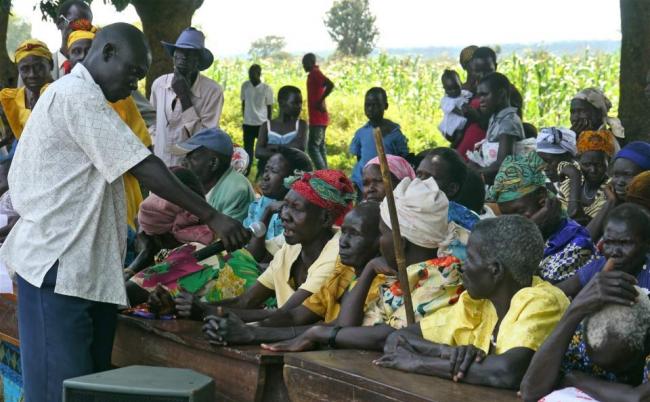
Photo: IRIN/Philippa Croome
Source: www.justearthnews.com
Support Our Journalism
We cannot do without you.. your contribution supports unbiased journalism
IBNS is not driven by any ism- not wokeism, not racism, not skewed secularism, not hyper right-wing or left liberal ideals, nor by any hardline religious beliefs or hyper nationalism. We want to serve you good old objective news, as they are. We do not judge or preach. We let people decide for themselves. We only try to present factual and well-sourced news.
Support objective journalism for a small contribution.


