October 09, 2026 01:01 pm (IST)

Follow us:


Kenya: UN seeks equitable approach to solve IDP situation
New York, May 8 (IBNS): The United Nations independent expert tasked by the Human Rights Council to look into conditions of internally displaced persons (IDPs) on Wednesday ended his visit to Kenya with a call for a more rigorous and equitable approach to solving the IDP situation in that East African country.
“Causes of internal displacement are many and recurrent, and solutions must be pursued more rigorously for all IDPs in an equal manner,” said Chaloka Beyani, UN Special Rapporteur on the human rights of IDPs since November 2010, pointing at post-election violence, inter-communal clashes, evictions or natural disasters as major causes of displacement in Kenya.
Kenya faces a range of humanitarian challenges. In addition to hosting the world largest refugee population of more than 550,000, there are also an estimated 300,000 IDPs, according to statistics compiled by the UN High Commissioner for Refugees (UNHCR).
During his nine-day official visit to Kenya from 29 April to 7 May, Beyani met with representatives of the national and county governments, and other stakeholders, including IDPs, in Nairobi, Nakuru and Moyale.
Following his visit to Moyale, where he saw burnt houses and destroyed schools leaving the displaced without a place to return to, Beyani stressed that “displaced pastoralists require special attention.”
“The end of displacement cannot be determined by a political decision, but by reality,” Beyani said on Wednesday at the end of his visit, “and durable solutions are only achieved once IDPs can enjoy their human rights without discrimination.”
He welcomed the commitment and efforts by the Government of Kenya to resettle the displaced, but noted that lack of secure land tenure, children out of school, no access to health services, lack of livelihood opportunities and discrimination remain obstacles to lasting solutions.
With this visit, Beyani followed up on the progress made since his last official mission carried out from 16 to 27 September 2011.
Kenya’s Act on internal displacement recognizes these causes and requires immediate implementation,” the Special Rapporteur underscored. “This is not only a priority requirement to achieve durable solutions, but also for better preparedness.”
Independent experts or special rapporteurs are appointed by the Geneva-based UN Human Rights Council to examine and report back on a country situation or a specific human rights theme. The positions are honorary and the experts are not UN staff, nor are they paid for their work.
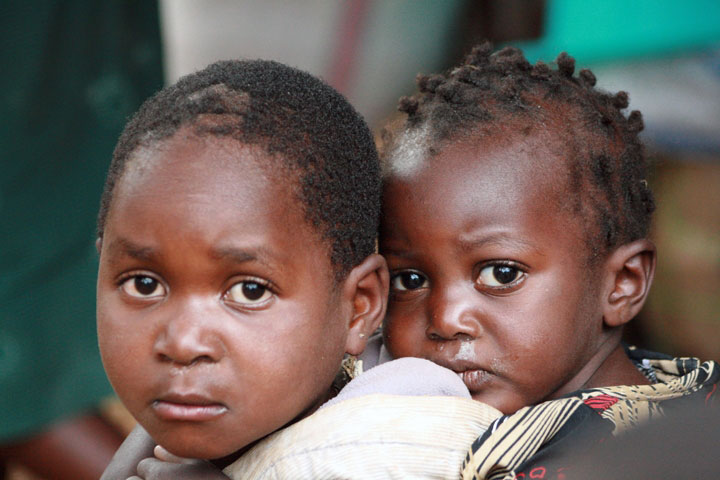
[A child carries another on her back at a camp for IDPs in Nairobi, Kenya (2008). Photo: Julius Mwelu/IRIN]
Support Our Journalism
We cannot do without you.. your contribution supports unbiased journalism
IBNS is not driven by any ism- not wokeism, not racism, not skewed secularism, not hyper right-wing or left liberal ideals, nor by any hardline religious beliefs or hyper nationalism. We want to serve you good old objective news, as they are. We do not judge or preach. We let people decide for themselves. We only try to present factual and well-sourced news.
Support objective journalism for a small contribution.



Latest Headlines
‘Crash axe’ blow fractured Smit Machchhar’s skull: Shocking details emerge from flydubai cockpit horror
Tue, Oct 06 2026
Israel was ready to shoot down Flydubai jet if it kept flying towards Tel Aviv: Reports
Tue, Oct 06 2026
Three Indian sailors safe after cargo ship struck and sunk off Romania in Black Sea attack; two dead
Mon, Oct 05 2026
‘Stomp on your head’: Omani flydubai co-pilot’s chilling posts on violence against women surface
Mon, Oct 05 2026
Flydubai cockpit incident: Omani pilot 'planned' to crash plane into Israel's Ben Gurion Airport in 9/11-style attack
Mon, Oct 05 2026