


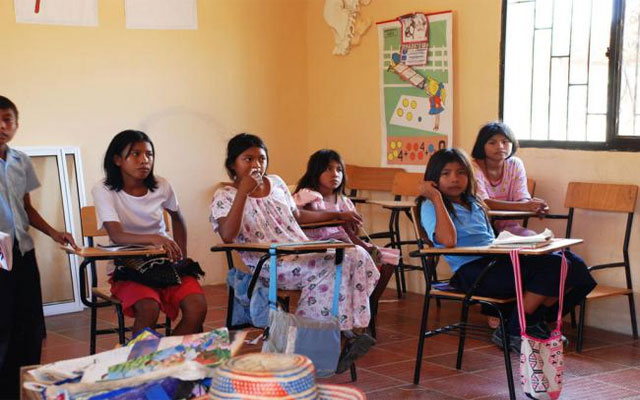
Kids more vulnerable to toxic chemicals in household dust
American researchers have reported that dust contains a wide range of toxic and cancer-causing chemicals, and kids are at higher risk for exposure when they crawl, play on the floor and put their hands in their mouths.
According to the American meta-analysis, in the peer-reviewed journal Environmental Science & Technology, 10 harmful chemicals were found in 90 per cent of dust samples taken from homes across more than a dozen states.
These 10 harmful chemicals found in dust samples were: Vinyl flooring, food contact materials DEHA (phthalate) Vinyl flooring, food packaging HHCB (fragrance) Scented products BBzP (phthalate), Vinyl flooring TPHP (flame retardant) Treated furniture, baby products, carpet padding, electronics TDCIPP (flame retardant),Treated furniture, baby products, carpet padding DnBP (phthalate Nail polish, paints DiBP (phthalate), Vinyl products, personal care and beauty products HBCDD (flame retardant), Polystyrene building insulation MeP (phenol), Cosmetics, lotions, and deodorants.
People need to be educated about these chemicals found in greater amount in home environment, said Dr. Ami Zota, an assistant professor of environmental and occupational health at Milken Institute School of Public Health at George Washington University.
Zota’s team generated data on 45 chemicals found in various household products, such as vinyl flooring, shampoo, cosmetics, furniture, electronics, building insulation, perfumes, air fresheners, carpets, non-stick cookware and many other items.
The chemicals include flame retardants, environmental phenols, fragrances, phthalates (used to make plastic softer and more flexible) and fluorinated chemicals (used as stain- and water-repellent treatments).
Experts confirmed that many of these chemicals are associated with health hazards such as cancer, endocrine or hormone disruption and reproductive toxicity.
Research also issued warnings that children, whose brains and bodies are still developing, are more vulnerable to effects of toxic chemicals they encounter when they crawl, play on the floor and put their hands in their mouths.
Although the researchers acknowledged that the study had limitations because the data came mostly from the East and West coasts, still, Canadian environmental health experts praised the study as it highlighted the potential dangers of dust.
Miriam Diamond, a professor in earth sciences at the University of Toronto also felt that it was a cause for great concern.
“When I was a kid, there was one TV in the house. Now, many homes have TVs in every room,” Diamond said.
One of the chemicals used in television screens is TPHP, for instance, a flame retardant, which has been linked to reproductive and nervous system toxicity, experts said.
Dr. Riina Bray, medical director at Women’s College Hospital’s Environmental Health Clinic said that she was also impressed at the strength of the analysis in Zota’s review.
Bray also recommended use of natural products, like basic baking soda and vinegar as a cleaner to reduce exposure to potentially harmful household dust.
“If you can’t understand what’s in a product — if the chemical name is something foreign to you — don’t buy it,” Bray said.
Zota’s team further recommended that people should follow precautionary measures such as dusting and mopping regularly, using a vacuum cleanerwith a high-efficiency particulate air (HEPA) filter, and frequently washing hands with plain soap and water instead of fragrant and antibacterial soaps.
Reporting by Asha Bajaj
Image courtesy: UN Photo/Gill Fickling
Support Our Journalism
We cannot do without you.. your contribution supports unbiased journalism
IBNS is not driven by any ism- not wokeism, not racism, not skewed secularism, not hyper right-wing or left liberal ideals, nor by any hardline religious beliefs or hyper nationalism. We want to serve you good old objective news, as they are. We do not judge or preach. We let people decide for themselves. We only try to present factual and well-sourced news.
Support objective journalism for a small contribution.


