


Progress against tropical diseases must be backed by poverty alleviation efforts – UN health agency
“[We have] observed record-breaking progress towards bringing ancient scourges like sleeping sickness and elephantiasis to their knees,” said Margaret Chan, the Director-General of the UN World Health Organization in a news release on Wednesday on efforts to tackle the diseases, known as NTDs.
“Over the past 10 years, millions of people have been rescued from disability and poverty, thanks to one of the most effective global partnerships in modern public health.”
The UN agency’s new report, Integrating Neglected Tropical Diseases into Global Health and Development, shows how political support, improvements in living conditions and supply of medicines have led to sustained expansion of disease control programmes in countries where these diseases are most prevalent.
Another major milestone was the endorsement of a NTD roadmap in 2012, in which WHO partners committed additional support and resources to eliminating 10 of the most common NTDs.
For sustaining this momentum, experts believe that wider progress towards realizing the 2030 Agenda for Sustainable Development will be crucial.
Meeting global targets for water and sanitation, such as those under the global Sustainable Development Goals (SDGs) will be key.
WHO estimates that 2.4 billion people still lack basic sanitation facilities such as toilets and latrines, while more than 660 million continue to drink water from “unimproved” sources, such as surface water.
“Further gains […] will depend on wider progress towards the SDGs,” said Dirk Engels, Director of WHO’s Department of Control of Neglected Tropical Diseases.
Once widely prevalent, diseases are now restricted to tropical and sub-tropical regions with unsafe water, inadequate hygiene and sanitation, and poor housing conditions. More than 70 per cent of countries and territories that report the presence of NTDs are low or lower-middle income economies.
The class of these illnesses include diseases such as dengue, rabies, trachoma, Buruli ulcer, yaws, leprosy, human African trypanosomiasis (sleeping sickness), dracunculiasis (guinea-worm disease), schistosomiasis (larval worm infection) etc.
Poor people living in remote, rural areas, urban slums, or conflict zones are most at risk.
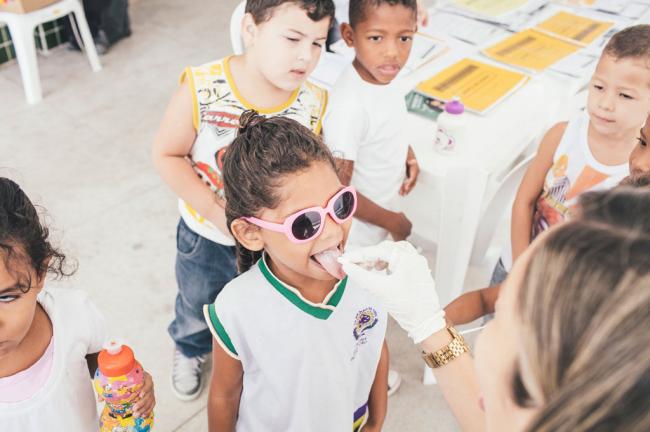
Photo: PAHO/WHO
Source: www.justearthnews.com
Support Our Journalism
We cannot do without you.. your contribution supports unbiased journalism
IBNS is not driven by any ism- not wokeism, not racism, not skewed secularism, not hyper right-wing or left liberal ideals, nor by any hardline religious beliefs or hyper nationalism. We want to serve you good old objective news, as they are. We do not judge or preach. We let people decide for themselves. We only try to present factual and well-sourced news.
Support objective journalism for a small contribution.


