


 South Sudan
South Sudan ‘determined to never go back to war’
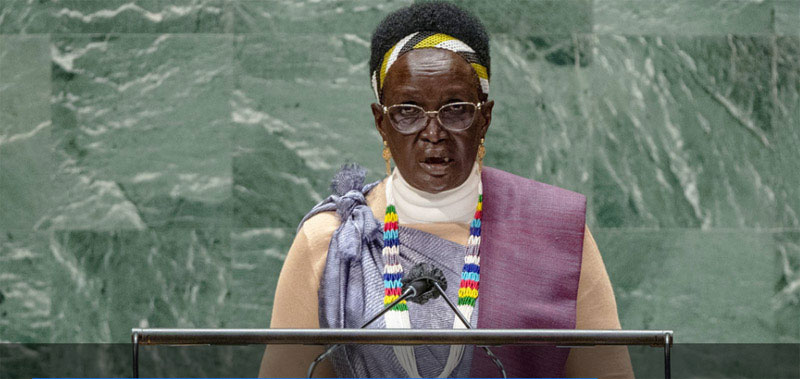
New York:South Sudan is “ready to turn a new page” towards greater peace, development and prosperity, Vice-President Rebecca Nyandeng de Mabior said in her speech in the UN General Assembly on Friday.
A decade after gaining independence from Sudan, the country remains “on a path of nation-building” and is working to implement a 2018 revitalized peace deal which led to the formation of a unity government last year.
“I want to assure our friends and partners that we are determined to never go back to war,” said Ms. De Mabior.
“We must replace the destruction of war with the productive use of our vast natural resources and national assets for the good of our people.”
Prioritize nation-building
The Vice-President recalled that when South Sudan became independent, the international community pledged to build capacity in nation-building, establishing a UN mission in the country, UNMISS, to support this process.
“However, after the outbreak of the war, that vision was abandoned, and priority was placed on protecting civilians and providing humanitarian assistance. As a result, support for capacity building of the State was terminated,” she said.
Ms. De Mabior stressed that supporting a State’s ability to govern responsibly and effectively is essential. It is also necessary to guard against what she called “the unintended consequences of dependency on humanitarian assistance.”
Given improvements in peace and security, she said it was now time to transition from emergency towards sustainable development.
“It is a painful and shameful situation for a country endowed with vast fertile land to be regarded as poor,” she added.
“We must ensure peace and security in the country and double our efforts to support our people who want to return, and are returning, to their areas of origin, for them to participate fully in nation-building and contribute to building food security in the country.”
Support youth and women
South Sudan is also “a youthful country”, and the Vice-President called for continued efforts to develop the skills of its youth and women “to provide an alternative to picking up the gun again and engaging in destructive behavior.”
Encouraging developments have included joint efforts by the national security forces and their UNMISS counterparts to promote rural peace and security, while the Government is set to unveil a national youth service programme.
“To fulfill the vision of our liberation struggle, we must use our oil revenues to fuel economic growth through investment in agriculture,” she said.
“We will invest in infrastructure to connect our rural communities to the markets. We need the public and private sectors, including foreign investors, to join hands in turning South Sudan's potential wealth into a reality.”
Glass ‘half-empty’
Ms. De Mabior reported progress in implementing aspects of the Revitalized Peace Agreement, particularly in the creation of state and national bodies and public financial management reforms
However, “the glass remains half-empty” in implementing a permanent ceasefire and transitional security arrangements, she said, noting the urgency for a unified army.
“The security sector reform is the most challenging part of the Agreement as it contains elements at the center of the violent conflicts in the country,” she said, calling for continued dialogue.
“Building sustainable peace requires inclusivity, collective investment, determination, diligence, and patience.”
Meanwhile, relations with Sudan have also improved, though outstanding issues remain over the oil-rich Abyei border area.
Ms. De Mabior stressed her country is determined to learn from the past.
“We must make the Revitalized Peace Agreement succeed, and we can only do that with the support of our regional and international partners. Simply stated, South Sudan desires and is ready to turn a new page,” she said.
Support Our Journalism
We cannot do without you.. your contribution supports unbiased journalism
IBNS is not driven by any ism- not wokeism, not racism, not skewed secularism, not hyper right-wing or left liberal ideals, nor by any hardline religious beliefs or hyper nationalism. We want to serve you good old objective news, as they are. We do not judge or preach. We let people decide for themselves. We only try to present factual and well-sourced news.
Support objective journalism for a small contribution.


