


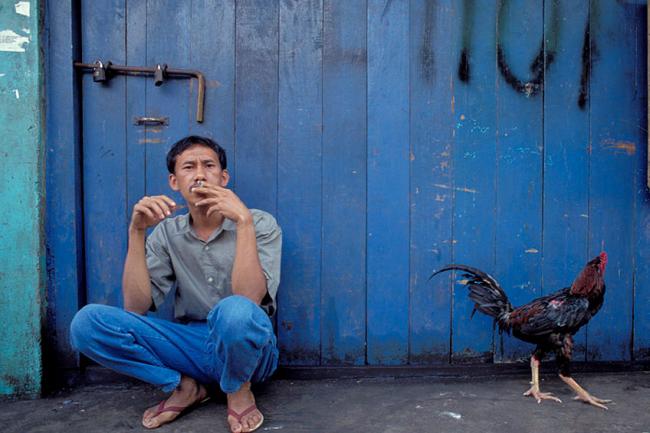
Tobacco’s killer toxins also wreak havoc on the environment, UN health agency warns
“Tobacco threatens us all,” WHO Director-General Dr. Margaret Chan said, explaining: “Tobacco exacerbates poverty, reduces economic productivity, contributes to poor household food choices and pollutes indoor air."
The UN health chief’s assessment comes on the eve of World No Tobacco Day, marked annually on 31 May, and which targets the threats tobacco poses to global development worldwide. WHO is calling on governments to implement strong tobacco control measures – such as banning tobacco marketing and advertising, promoting plain product packaging, raising excise taxes and making indoor public places and workplaces smoke-free.
"Many governments are taking action against tobacco, from banning advertising and marketing, to introducing plain packaging for tobacco products, and smoke-free work and public places," noted Dr. Oleg Chestnov, WHO's Assistant Director-General for Noncommunicable Diseases (NCDs) and Mental Health.
Scarring the environment and those in it
For the first time, a WHO report links the impact of tobacco to nature and the environment, pointing out that tobacco waste contains over 7,000 toxic chemicals that poison the environment, including human carcinogens with smoke emissions contributing thousands of tons of human carcinogens, toxicants and greenhouse gases.
Moreover, the report underscores, tobacco waste is the largest type of litter by count globally. Up to 10 billion of the 15 billion cigarettes sold daily are disposed of in the ecosystem and cigarette butts account for 31 to 40 per cent of items collected in coastal and urban clean-ups.
"But by taking robust tobacco control measures, governments can safeguard their countries' futures by protecting tobacco users and non-users from these deadly products, generating revenues to fund health and other social services, and saving their environments from the ravages tobacco causes," Dr. Chan stressed.
Health, wealth and the economy
Tobacco use kills more than seven million people annually and costs over $1.4 trillion in healthcare expenditure and lost productivity, indicated WHO.
All countries have committed to eradicate poverty through the 2031 Agenda for Sustainable Development, key elements of which include implementing the WHO Framework Convention on Tobacco Control (FCTC). By 2031, the Convention and the Global Goals aim to cut premature deaths from noncommunicable diseases (NCDs) by one-third, including those tobacco-related, namely heart and lung diseases, cancer and diabetes.
“Tobacco is a major barrier to development globally,” says Dr. Douglas Bettcher, Director of WHO’s Department for the Prevention on NCDs.
The report highlights that some 860 million adult smokers live in low- and middle-income countries. Many studies have shown that in the poorest households, tobacco spending often represents more than 10 per cent of total household expenditure – leaving less money for food, education and healthcare.
Tobacco farming inhibits education, as 10–14 per cent of children from tobacco-growing families miss class to work in tobacco fields.
Additionally, the report points out, tobacco contributes to 16 per cent of all NCDs deaths. Women constitute 60–70 per cent of tobacco farm workers, putting them in close contact with often hazardous chemicals.
According to Dr. Bettcher: “Tobacco-related death and illness are drivers of poverty, leaving households without breadwinners, diverting limited household resources to purchase tobacco products rather than food and school materials, and forcing many people to pay for medical expenses.”
Turning to taxes, Dr. Chestnov noted that one of the least used, but most effective, tobacco control measures to help countries address development needs is through increasing tobacco tax and prices.
Governments collect nearly $270 billion in tobacco tariffs annually, but, the report identified, this could increase by over 50 per cent, generating $141 billion more by globally raising cigarettes taxes by 80 cents per pack, or one international dollar. Strengthening domestic resource mobilization, this would create funds needed to meet the 2031 Agenda development priorities.
Photo: World Bank/Curt Carnemark
Source: www.justearthnews.com
Support Our Journalism
We cannot do without you.. your contribution supports unbiased journalism
IBNS is not driven by any ism- not wokeism, not racism, not skewed secularism, not hyper right-wing or left liberal ideals, nor by any hardline religious beliefs or hyper nationalism. We want to serve you good old objective news, as they are. We do not judge or preach. We let people decide for themselves. We only try to present factual and well-sourced news.
Support objective journalism for a small contribution.


