


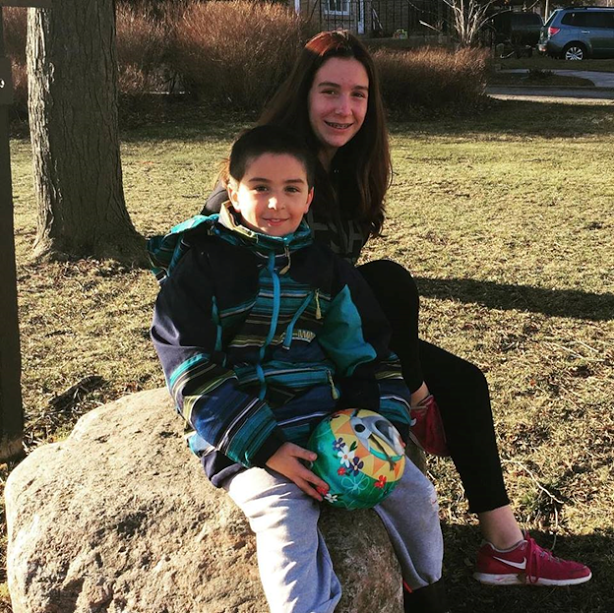
Toronto: Eight-year old boy killed due to Pharmacy's error
In March, 2016 when Andrew’s mother Melissa Sheldrick administered Andrew with her own hand his usual liquid medication for his REM sleep disorder and tucked him into bed.
Little did she know that she would see her son’s dead body the next morning.
After almost five months they learnt from the coroner that the boy died from a lethal dose of baclofen, a powerful muscle relaxant usually used to treat adults with MS for which Andrew had not been prescribed.
Sheldrick had never imagined such a medication mix-up could even occur.
When she found that her son had trouble swallowing his pills, he was referred to a compound pharmacy who produced a mixture in place of pills.
For 18 months, there had been no problems but then that fatal refill.
Amit Shah, the pharmacy’s owner refused to make any comments.
Floradale Medical Pharmacy in Mississauga had refilled their son’s prescription the day before for his usual tryptophan. But according to the family’s $4-million lawsuit filed this week, “an analysis of the tryptophan medication compounded by Floradale revealed that it contained 135 mg of baclofen and no trace of tryptophan.
This indicates that baclofen was substituted for tryptophan at Floradale in error.”
The Ontario College of Pharmacists doesn’t require their members to report errors like incorrect dosages, accidental medication substitutions, misread prescriptions.
Only Nova Scotia makes it mandatory to report all medication errors and near-misses to the Institute for Safe Medication Practices (ISMP) Canada in its first three years. The province had a 75,000 reported incidents.
In the U.S., the accuracy rate is estimated at 98.3 percent. “Canadian researchers have estimated that extrapolating this data to Canada would have resulted in 7 million medication errors in 2009, based on 453 million prescriptions dispensed in Canada in 2008,” says spokesman Julie Greenall.
The ISMP estimates that only one percent of the cases reported to them have resulted in patient harm.
“How does this happen?” demands his mother. “This is so unbelievable and so unacceptable. We don’t want anyone to have to go through what we have. Pharmacies have to be accountable for their errors.”
In their grief, the Sheldricks had started a petition calling on Queen’s Park to force pharmacies to report any medication errors for the benefit of consumers as well as to identify the mistakes and correcting them. Melissa Sheldrick was able to gather more than 2,000 signatures on her petition.
“Nothing can bring Andrew back to us, however, in his caring spirit we want the laws to protect all people, and so we are asking that Ontario create a law to enforce the use of error tracking tools for dispensaries,” Sheldrick wrote on the change.org site.
“Thousands of pharmacy errors are made annually, but there is no law in Ontario requiring such errors to be reported or tracked. A reporting system would help put in place a vehicle to examine errors and see how training and procedures can be improved to reduce the number and types of errors.”
(Reporting by Asha Bajaj, Image: Andrew Sheldrick/Facebook)
Support Our Journalism
We cannot do without you.. your contribution supports unbiased journalism
IBNS is not driven by any ism- not wokeism, not racism, not skewed secularism, not hyper right-wing or left liberal ideals, nor by any hardline religious beliefs or hyper nationalism. We want to serve you good old objective news, as they are. We do not judge or preach. We let people decide for themselves. We only try to present factual and well-sourced news.
Support objective journalism for a small contribution.


